Wednesday, December 29, 2021

The Docent's Memo (Dec. 29, 2021)

VIDEO: "Setting up your plate carrier for real combat: Afghan Deployment"--Modern Tactical Shooting (25 min.)

Firearms/Shooting/Self-Defense:

  • "Should You Shoot? Self-Defense Tips You Don't Know" by Mike Boyle, The Armory Life. This is another article on the common law elements of self-defense. I know that this can seem to be repetitive, but these are things you need to re-read and revisit to make sure that it has sunk into your brain so you know what to do under stress. While we are (or should be) familiar with the basic elements of self-defense: ability, opportunity, and jeopardy (or some varient of these three), the author adds a fourth factor:
In my discussions on deadly force, I like to factor in a fourth element. Preclusion. This might be defined as the act of preventing something from happening. Before resorting to deadly force, consider other options you can take which may include fleeing the scene or using another, lower-force option (providing it would lead to safe control). I recognize that your back may be up against the proverbial wall and the only way out is to utilize deadly force, but if those other options are viable, they should be taken. For the responsible citizen, avoidance of conflict should be the guiding concept.
  • "5-Shot-Group Shapes: Here's What They're Telling You"--Rifleshooter Magazine. The author explains that your group may be telling you to bump up (or reduce) your powder load, and a lot more.
  • "The AR-10 and Big Game Cartridges" by Bryce M. Towsley, Range 365. The author briefly discusses several hunting cartridges for the AR-10 platform besides the ubiquitous .308 Winchester: the .243 Winchester, 6.5 Creedmoor, 7mm-08 Remington, .338 Federal, .358 Winchester, and .500 Auto Max for those of you interested in a dangerous game rifle.
  • "Running Spares- Keeping Your Weapon Going" by NC Scout, Brushbeater. A look at spare parts you want on hand for your combat or prepper rifle. The author notes that the part he has seen fail most often in an AR style rifle is the bolt; he recommends keeping one or two spares together with a go/no-go set of gauges. He also recommends using standard parts as much as possible to make it easier to find spares, and to keep extra trigger packs around. I would recommend making sure that you have extra springs, a spare firing pin, and extra gas and o-rings for the bolt. I keep an "oops" kit and a bolt rebuild kit on hand and probably will add an extra bolt or two. 
  • "Long Barrel, or Short? The Effectiveness Trade-Off Between 14.5″ and 20″ Barrels" by Nathanial Finch, The Firearm Blog. Comparing the effectiveness of M855 from 14.5″ and 20″ barrels, assuming a fragmentation threshold of 2500 ft/s, "the M4 Carbine with its 14.5″ barrel and 2,920 ft/s muzzle velocity meets our velocity threshold at 125 meters, while the M16A2 with its 20″ barrel and 3,150 ft/s muzzle velocity meets the threshold at 190 meters." 
In other words, the difference in velocity between the two rifles is enough to create a “gap” in performance of 65 meters, or put differently, the M16A2 has by this model a 52% fragmentation range advantage versus the M4.

Nathaniel points out that this is using idealized muzzle velocity. If the barrel is worn out or the ammunition is cold, it could result in lower muzzle velocities and decreased performance. Assuming a 200 f/s less muzzle velocity (which is realistic for cold conditions):

The M16A2 with a compromised muzzle velocity gives us just a shade more fragmentation range than the fresh M4 under ideal conditions – 133 meters – while the M4 with a compromised muzzle velocity gives a very disappointing fragmentation threshold of 66 meters. This means that in these less than ideal conditions, the M16A2 has a 67 meter – or 101% – advantage versus the M4. 

However, the lesson that Nathaniel takes from all this is not that it is necessarily better to have a longer barrel (and higher muzzle velocity) but to have a bullet with a lower fragmentation velocity, which is what the M855A1 is supposed to provide. 

  • "Shooting Lightweight Rifles: Tips & Techniques"--American Rifleman. Most of the article is about tips for accurately shooting a lightweight, slender barrel rifle. But the author also discusses why he prefers lightweight rifles for hunting:
Having hunted extensively with light rifles, I now prefer them in every case where the available caliber is appropriate. With a bit of practice, they’re staggeringly accurate and blessedly easier to carry afield. While it’s difficult to imagine, a couple of pounds at the gun counter can become the weight of the world by the time you climb to the top of a mountain. Carrying a light rifle will make just about any hunt even more enjoyable.

    The rifle comes with a HiViz optics rail for scope mounting that features a fully adjustable rear sight. Hunters who prefer iron sights will really appreciate the front sight, which is also from HiViz. It incorporates a green fiber-optic rod and a tritium ring, so it’s easy to pick up in any lighting condition and is particularly handy early and late in the day.

    The gray/black laminated stock has come in for attention as well. The fore-end is noticeably slimmer than older Marlins and feels better in the hands, and the checkering is sharper—without being too sharp—for a non-slip grip. The buttstock doesn’t have the black pistol grip cap found on older Marlins but rather a laser-engraved horse-and-rider logo. The famous Marlin “bullseye” on the bottom of the stock is rendered in red and white instead of black and white. A beefy black recoil pad soaks up kick.

The article reports other mechanical and finish changes that have improved the rifle and made it more accurate. And, of course, like other Ruger products, the rifle features a hammer forged barrel.

VIDEO: "THE Earth Disaster Documentary"--Suspicious Observers (1 hr 33 min).
This is a compilation of highlights from prior videos as well as some updated information on the coming magnetic excursion and super-flare event.

Prepping/Survival:

    If you want to be dazzled by a spectacular northern lights display, your best bet is to skywatch near the North Pole. But that wasn't the case 41,000 years ago, when a disruption of Earth's magnetic field sent auroras wandering toward the equator.

    During this geomagnetic disturbance, known as the Laschamp event or the Laschamp excursion, the planet's magnetic north and south weakened, and the magnetic field tilted on its axis and diminished to a fraction of its former strength.

    This lessened the magnetic pull that normally directs the flow of high-energy solar particles toward the north and south poles, where they interact with atmospheric gases to illuminate night skies as the northern and southern lights.

    It took about 1,300 years for the magnetic field to return to its original strength and tilt, and during that time the auroras strayed to near-equatorial latitudes where they are typically never seen, scientists reported on Thursday (Dec. 16) at the annual conference of the American Geophysical Union (AGU), held in New Orleans and online.

    This period of intense geomagnetic change may also have shaped changes in Earth's atmosphere that affected living conditions on parts of the planet, presenter Agnit Mukhopadhyay, a doctoral candidate in the Climate and Space Sciences Department at the University of Michigan, said at the AGU conference.

    From what I’ve seen, if you’re looking for the sharpest possible edge, pick a humble, low-tech steel that’s been around forever called 1095. It sharpens easily and rusts if a cloud passes over the sun. Everything in steel is a tradeoff. All of my knives are made of 1095, or W-2, or D-2, or 0-1, or 5016. They all rust if you don’t take care of them, but they all sharpen easily and take a terrific edge and acquire a nice blue color as they are exposed to blood, onions, or anything corrosive.

    Or you can choose it by make. I don’t know of a custom smith who will sell you a knife with a poor edge. Some manufacturers do especially well. Swedish Moras, Norwegian Helles, American DiamondBlades, and any Japanese knife all come very, very sharp, and are easy to maintain that way.

  • "Food Acquisition Methods That Just Don’t Work"--Organic Prepper. I think that anyone that believes that they are going to get most of their calories post-SHTF from hunting are in for a rude surprise. But those that rely on primitive hunting techniques will be in for an even ruder surprise according to this article. It specifically picks on those thinking of using throwing sticks (e.g., boomerangs), slings, and atlatls (spear throwers). The author instead suggests learning to use a bow, learn trapping, or use firearms for hunting.

VIDEO: "DECLINE & The Inevitable FATE of EMPIRE"--Felix Rex (15 min.)

News & Current Events:

"We believe racial justice is an urgent issue close to the heart of God," the event description states, "and therefore are eager to create opportunities to disciple our soldiers and stakeholders in ways that will encourage deeper holiness and to provide those in our ranks with the resources to help alleviate the pain of suffering humanity within our communities and institutions."

I'm willing to bet that God, being concerned with bringing people to salvation and thinking in terms of time scales of millions and billions of years, probably doesn't give a rat's fart about the social justice movement. The belief He would be concerned with social justice is much the same as the myopia that infected the Jews during Christ's ministry. Jesus was here to free them from spiritual death and slavery, but they were more concerned about whether He would free them from Roman rule. 

    Scanlon was approached by two black men who demanded the keys to her vehicle as she walked toward her parked vehicle after taking a tour of the park around 2:45 p.m., according to police and the congresswoman’s office.

    One suspect drove off in Scanlon’s vehicle while the other fled the scene in a dark-colored SUV, police said. The congresswoman, whose district covers parts of Philadelphia and its western suburbs, was unharmed, though she also lost multiple cell phones to the carjackers.

Bernstein observes that Scanlon "was one of 125 Democratic sponsors of the George Floyd Justice in Policing Act, which aimed to make it easier for states and localities to replace police officers with social workers and other first responders." 

Lovell as you likely know runs the Warrior Poet Society. In this video he explains how wokism and the hatred it teaches of the United States will undermine the morale of our troops.

Opinion & Analysis:

    Mike "Wompus" Nieznany is a 73-year-old Vietnam veteran who walks with a cane from the combat wounds he received during his service. That disability doesn't keep Nieznany from making a living selling custom motorcycle luggage racks from his home in Gainesville, Georgia. Neither will it slow him down when it's time to visit Washington, D.C.—heavily armed and ready to do his part in overthrowing the U.S. government.

    Millions of fellow would-be insurrectionists will be there, too, Nieznany says, "a ticking time-bomb" targeting the Capitol. "There are lots of fully armed people wondering what's happening to this country," he says. "Are we going to let Biden keep destroying it? Or do we need to get rid of him? We're only going to take so much before we fight back." The 2024 election, he adds, may well be the trigger.

    Nieznany is no loner. His political comments on the social-media site Quora received 44,000 views in the first two weeks of November and more than 4 million overall. He is one of many rank-and-file Republicans who own guns and in recent months have talked openly of the need to take down—by force if necessary—a federal government they see as illegitimate, overreaching and corrosive to American freedom.

    The phenomenon goes well beyond the growth of militias, which have been a feature of American life at least since the Ku Klux Klan rose to power after the Civil War. Groups like the Proud Boys and the Oath Keepers, which took part in the January 6th riot at the Capitol and may have played organizational roles, have grown in membership. Law enforcement has long tracked and often infiltrated these groups. What Nieznany represents is something else entirely: a much larger and more diffuse movement of more-or-less ordinary people, stoked by misinformation, knitted together by social media and well-armed. In 2020, 17 million Americans bought 40 million guns and in 2021 were on track to add another 20 million. If historical trends hold, the buyers will be overwhelmingly white, Republican and southern or rural.

    America's massive and mostly Republican gun-rights movement dovetails with a growing belief among many Republicans that the federal government is an illegitimate tyranny that must be overthrown by any means necessary. That combustible formula raises the threat of armed, large-scale attacks around the 2024 presidential election—attacks that could make the January 6 insurrection look like a toothless stunt by comparison. "The idea that people would take up arms against an American election has gone from completely farfetched to something we have to start planning for and preparing for," says University of California, Los Angeles law professor Adam Winkler, an expert on gun policy and constitutional law.

Another example of projection on the Left. If they had sufficient arms they would try to overthrow a populist president, so of course, they think, conservatives would do the same when faced with a Leftist president. "Better the devil you know than the devil you don't" is probably the primary reason that I don't expect conservatives to try and overthrow the government. And, notwithstanding the Left's fevered dreams, January 6 was not an insurrection. It was a protest by a bunch of people saying "listen to us!" (Of course, when the Left has orchestrated protests inside the Capitol Building--or organized terrorist attacks using guns, or set off bombsand more bombs--it is something to be admired and praised).

    The American right must acknowledge the association of guns with violence, while rejecting the fallacy that all violence is evil. Like the hoplite with his shield and spear, gun owners who take their duty seriously become bulwarks against both tyranny and anarchy. Instead of pretending our guns are only for outdoor sportsmanship, a luxury graciously allowed us by a piece of paper in the National Archives, we should acknowledge what they represent and accept the violent responsibility they entail.

    Heavily armed men are a necessary but insufficient condition for the rule of law. The U.S. Constitution—a mere document subject to revision and manipulation—cannot alone protect the right to keep and bear arms. Rather, the inverse is true: keeping and bearing arms, as an act of political violence, is all that protects the Constitution.
    Before the closures, my district was already struggling with special education teacher vacancies, especially in schools serving high-poverty neighborhoods. Staffing shortages and the lack of experienced teachers had clear effects. It was common for me to get students in sixth grade who had only mild or moderate disabilities but who could not read at all. After a few months it would become obvious that these students were more than capable of educational growth but simply hadn’t received adequate instruction.

    Learning to read can change the trajectory of a child’s life, but the older children get, the more difficult it becomes for them to learn basic literacy skills. Having seen it first hand, I knew that the learning loss caused by school closures would be devastating. Even kids in general education who fall behind are rarely able to catch up. By the time students reach sixth grade, children in the poorest school districts are already four grade levels below children in the richest districts. Third grade students who are not proficient in reading are four times less likely to graduate from high school, and according to the National Center for Educational Statistics, as many as 21% of U.S. adults are illiterate or functionally illiterate.

    Because the academic and social progress of my students was at stake, I followed the COVID-19 data closely from the beginning. And I found that school closures were irrational and counterproductive. According to the most comprehensive studies to date, COVID’s survival rate among children and adolescents appears to be around 99.995%. The child mortality figures for COVID are similar to the respiratory syncytial virus (about 500 annual pediatric deaths), for which schools have never been closed. One Swedish analysis looked at COVID data from March to June 2020 when Swedish schools were open without masking. The analysis found that not a single child died with COVID during that time period. A study from the American Academy of Pediatrics found that in California hospitals, COVID cases for children between May 2020 and February 2021 had been overcounted by 45%. Several other studies found that children were far less likely than adults to spread the virus, that the effectiveness of closures for containing spread was, at best, highly unclear, and that closing schools had no effect on community transmission. Nor were closed schools linked to lower COVID mortality.

    When it became clear that California public schools would stay closed despite the paucity of evidence that closures were effective, and the far greater amount of evidence that schools could safely reopen, I tried to volunteer to teach kids with severe disabilities in person. But my district and union would not allow it. I emailed other teachers I knew from my union and cited statements from organizations like the American Academy of Pediatrics that were urging schools to reopen. State and local leaders kept referring to rising cases and deaths to justify closures, but later our county would reveal that it had actually overcounted total COVID deaths by 25%. The county dropped hundreds of “incidental” COVID deaths (in the case of car accidents, for example) from its register, meaning the figures that had been used to rationalize school closures in my district were not even accurate.

    But I struggled to find other teachers who agreed with me. When I mentioned to colleagues that schools were open in Europe or Florida, they looked at me as though I was somehow a threat. Before school closures, I had nothing but respect for other teachers and for the leadership of the teachers union. But in my view the treatment of children during the COVID era has been a moral stain on the profession. During over a year of online learning, an unforgivable crime was committed against public school children and families. And as it unfolded, everyone around me said it was acceptable, necessary, and even good.

    If one takes the ideologues who rule over America at their word, then the governing principles of this country’s reigning regime are things like fairness, equality, diversity, or “anti-racism.”

    But of course, anybody with a brain today isn’t taking America’s rulers at their word. It is obvious, and has been for many years now, that there is no spirit of “fairness” or “anti-racism” in the heart of their ideology. Instead, the spirit at the heart of America’s leadership is bitter, envious, resentful, hateful.

    Who is it hateful toward? You know who. The modern American regime is built on explicit, institutionalized hostility to the people who most resemble the great Americans of the past. It is anti-white, anti-male, anti-Christian, anti-rural, and anti-middle class. The more of these traits a person has, the more worthy of hate they become. The more the Globalist American Empire decays and squanders the inheritance it was given, the more bile and hatred it directs against those who symbolize what came before.

    But those on the receiving end of this new discriminatory regime may not appreciate its full scope or the ultimate fate that the Globalist American Empire has planned for them. They may see recent anti-white animus as a temporary spell, or a limited affair that can be waited out.

    They are wrong. America’s shrinking white middle class are the target of an ever-intensifying cycle, whose mechanics are ripped straight from another oppressive regime, the Soviet Union of the 1920s and 30s.

    The white American middle class have become America’s kulaks — Blamed for every problem, vilified for every success, and deserving of every punishment. Their destruction has become a fundamental goal of American political life. 

    In previous posts we have talked about how an unelected cabal of bankers, technocrats, bureaucrats and their pet politicians are trying to seize control of our nation and subvert the principles on which it was founded. Michael Yon has termed them collectively as The Beast. They are ignoring the legal constraints placed on them by the US Constitution and the body of law that this nation is founded on. Some, including myself, believe that they have already succeeded in gaining control of the levers of government. We have also discussed how it is time to stand up and resist those tyrants.

    If we are to resist we need to prepare for what is ahead. We need to toughen up, be smarter and be more resilient. Because no matter whether we resist or not this nation is in for some tough times.

When Bishop Desmond Tutu passed away on Sunday, he was celebrated across the world as a man who led non-violent opposition to South Africa’s white minority rule called apartheid.  And he should be honored for that achievement.  But the media’s glowing praise of the Bishop left out something important, the hatred he displayed for the Jewish people.

Then, quoting Alan Dershowitz's comments that Tutu:

 “is no mere anti-Zionist …. He has minimized the suffering of those killed in the Holocaust. He has attacked the ‘Jewish’— not Israeli — lobby as too ‘powerful’ …. He has invoked classic antisemitic stereotypes … about Jewish ‘arrogance,’ ‘power’ and money …. [A]nd has accused ‘the Jews’ of causing many of the world’s problems” (“Bishop Tutu Is No Saint When it Comes to Jews,” Dec. 20, 2010, The Gatestone Institute). Tutu, impervious to facts, also has denied that Israel is a civilized democracy and unsuccessfully urged the Capetown Opera not to perform there.

But apparently the most grievous affront was that Tutu downplayed the Holocaust by telling Israeli Jews that they should forgive Nazi's for the Holocaust (Dunetz says that "Anyone who has ever gone through Yad Vashem and can make a call for forgiveness has no heart.") and by suggesting that black South Africans suffered as much or more under Apartheid. Dunetz explains:

Tutu has made some alarming statements about the Holocaust.  He has publicly complained about what he calls “the Jewish monopoly of the Holocaust.” (Jerusalem Post, July 26, 1985) Sorry Bishop, but Jews do own the copyright.  We paid for it with more than Six Million lives, one and a half million of those were little children.

Dunetz adds that Tutu "compared Judaism to Hitler, Stalin, and tyrants, along with bloviating the stereotype that the powerful Jewish lobby runs the U.S."

    The Jews are not the only ones that suffered under the Nazis. Although it is claimed that 6 million Jews died, even the Holocaust Museum concedes that it is merely an estimate and it is impossible to know how many Jews were killed, and there are other estimates that put the number at 5 to 5.5 million. Moreover, the Holocaust Museum acknowledges that many other groups also died in Nazi camps including Gypsies, the disabled, Poles, Soviet citizens and prisoners of war, and religious groups such as the Jehovah Witnesses. In fact, it generally acknowledged that at least 5 million non-Jews were murdered by the Nazis. So it is possible that the number of "others" equaled or exceeded the number of Jews murdered by Nazis. It is sick that Jews (speaking about them as a group and not individually) are so obsessed with victimhood that they don't even want to share the "spotlight" of being Holocaust victims.

I don't know Tutu's motivation for telling Israeli Jews to forgive the Nazis. Perhaps it was as simple as the New Testament admonition that God will choose whom He will forgive, but of us it is required to forgive all people. As I've noted before, God is a really smart guy. It is unhealthy to obsess over wrongs. I think this can apply as much to a people or nation as much as to an individual.

VIDEO: "The Mini-14 - The Royal Bermuda Regiment's Service Rifle"--The Armourer's Bench (4 min.)

And Now For Something Completely Different:

    The big reveal for year-end 2018: Citibank, the No. 1 institution on the roster, held 87.9 million New York Federal Reserve Bank shares – or 42.8 percent of the total. 

    The No. 2 holder stockholder was JPMorgan Chase Bank, with 60.6 million shares, equal to 29.5 percent of the total. In other words, the two banks together control nearly three-quarters of the regional bank’s capital shares.

    But does share ownership matter? 

    Each bank, after all, has only one vote when it comes to electing bank directors (their only shareholder responsibility) regardless of stock holdings. And New York Fed shares cannot be traded, shorted, or pledged as collateral. 

    Nobody is getting rich owning the New York Fed’s stock. The shares long paid a dividend of 6 percent. But that payout was amended in 2016; now, members with more than $10.7 billion in assets, like Citibank and JPMorgan, receive the lesser of the 6 percent dividend or the high yield of the most recent 10-year Treasury auction rate – 1.62 percent as of earlier this year.

    From Citibank and JPMorgan, there is a steep drop off in shareholdings. Bulge bracket rivals hold far fewer shares, with Morgan Stanley Bank owning 4.8 million and its affiliate Morgan Stanley Private Bank 2.8 million shares, for a combined 3.7 percent stake in the New York Fed. 

    Goldman Sachs Bank USA owned 8.3 million shares, equal to 4 percent of the total, and Bank of New York Mellon held 7.2 million shares, or 3.5 percent.

    It may surprise observers that some big holders are affiliates of foreign banks: HSBC Bank USA, part of London-based HSBC Holdings PLC, owned 12.6 million shares, or 6.1 percent, of the New York Fed’s total. Deutsche Bank Trust Co. Americas was the owner of 1.7 million shares, and Deutsche Bank Trust Company 60,678 shares, for a combined 0.87 percent stake. 

    Mizuho Bank (USA), an affiliate of Tokyo-based Mizuho Financial Group, owned 819,344 shares. Industrial & Commercial Bank of China held 221,278 shares. 

    There are scores of smaller owners, from Bank of Cattaraugus, which held 180 shares, to Cayuga Lake National Bank, with 375. 

    Still, it serves as yet another red flag for those concerned with the power of too-big-to-fail banks that the top two banks hold nearly three-quarters of the New York Fed’s capital shares. 

    “It’s surprising to see how concentrated it is,” says Razza. That lopsided ownership hasn’t changed much since the financial crisis: In 2007 JPMorgan owned 41.7 percent of the New York Fed’s shares and Citibank 36.6 percent, a combined 78.3 percent.

    The amount of share ownership plays no explicit role in the complex electoral system that determines the make-up of the New York Fed’s board. 

    A refresher: The nine-person NYFRB board is divided into three classes of three members each. 

    Banks elect three class A directors to represent their own interests. The same banks also elect three class B directors to represent the interests of the public. The three class C directors, including the New York Fed’s chairperson and deputy chairperson, are also designated to represent the public interest and are selected by the Federal Reserve Board of Governors in Washington.

    One mystery is why the New York Fed would not freely disclose stock ownership to begin with, given that the information can be estimated with some accuracy using public data from the Federal Deposit Insurance Corp. and other sources. 

    The peculiarity of these board elections may endow New York Fed stock ownership with more importance than is initially apparent, says economics professor Andrew Levin of Dartmouth College. 

    The member banks are divided into three categories – group one for banks with more than $2 billion in capital and surplus (like Citibank and Goldman Sachs Bank), group two for those with between $40 million and $2 billion (like Safra National Bank of New York and Bessemer Trust Company) and group three for banks with less than $40 million (like Tioga State Bank, and Brown Brothers Harriman National Trust). 

    Group one banks vote for one particular designated class A director as well as one class B director. The group two and group three banks similarly vote for one class A and class B director each.

    “Given that the ballot has invariably had only a single candidate for each director, there’s room for doubt about whether some big banks might be playing a key role behind the scenes in selecting those candidates,” says Levin, who has served as a special advisor to the Federal Reserve Board in Washington. “There needs to be greater transparency about how that candidate is selected.” 

    Tuesday, December 28, 2021

    When Long Guns Are The Wrong Tool

     Greg Ellifritz's "Weekend Knowledge Dump" from this past Friday included an article from Reflex Handgun titled, "Long Guns: The Wrong Tool for the Job." Outside of hunting or recreation, the author noted that the use of long gun is rather limited for your typical civilian:

    What are the uses for the long gun in civilian life?  I can think of three primary ones:

        1. If barricaded in the home in the safe room during home invasion, the long gun is excellent.

        2. When the shit really hits the fan and society collapses, the rifle is your friend.

        3.  When you must protect your liberty from overreaching government (as is the entire premise of the 2nd Amendment even though many shy away from talking about that fact) the rifle is the tool.

    Outside of these uses, the long gun is limited in defensive use and the handgun is the primary. 

    I agree. Way back in 2014, I published a post with the title "The Top 5 Firearm Myths Among Preppers" in which Myth #4 was "Your Primary Weapon is Your Rifle." I wrote:

        There are a significant number of preppers that seem to believe that when whatever earth-rendering disaster, financial collapse, or alien invasion occurs, we will suddenly be launched into a full-blown, "Mad Max" situation of kill-or-be-killed. They envision picking off bandits (or U.N. Peacekeepers) at hundreds of yards as they advance toward the particular prepper's retreat, all the while safely ensconced in a concealed location beyond the reach of the bandits' weapons. This is their focus for self-defense.

        Even moving into the mainstream of the prepper movement, there is an emphasis on tactics and weapons for post-SHTF/without rule of law tactics and weapons. For instance, there was this post earlier today at the Survivalist Blog, stating:

    ... Distance ALWAYS equals two things. Time and safety. The time aspect of this is quite simple. The further away an enemy is from a target the longer it will take to achieve their objective. The further away from your loved ones that you can engage a threat provides reaction time for your and your loved ones to initiate whatever pre arranged defense protocols you have established. This in and of itself provides an added level of safety. If you are trying to protect your family, and they are going to be in the home, than the defense should be started as far away from the house as is possible. A good shot with an AR style rifle can ruin your day from five hundred meters in. I am aware that it may not be possible to establish a perimeter at that distance, but that would be best. I suggest possibly establishing a forward outpost at this distance if possible. A forward placed rifle and a few well placed shots may well be all it takes to persuade someone that its better to go somewhere else.

    I'm not criticizing the author of that post because the tactics, and reliance on a rifle, are sound ... when considering warfare, insurgency, defending against raiders, or other situations where you expect to be in combat.

        But when we prepare, we aren't only, or even necessarily, preparing for the end of civilization, but other disasters, big and small and in-between. We cannot overlook the here and now and focus on the post-SHTF to the exclusion of everyday preps. And this applies equally to weapons and our training. As Fernando "FerFal" Aguirre explains in his book, Surviving the Economic Collapse:

        Rifles are terrific but they are not your main weapon. Again, here's the difference between a soldier or a SWAT member and you. 

        A soldier carries his rifle because it's his job to do so while at war. SWAT guy has his rifle when doing his thing as well but both soldier guy and SWAT guy do NOT carry their rifles when they go pick up the kids at a friend's birthday party. And yes, the bad guys will attack you at that birthday party, or some other ridiculously unlikely circumstance. 

        That's the way it is my friend. Understand that while I'm writing this tonight there are thousands staying awake in their beds thinking about possible plans and ideas to rob people like you and me.

    (Surviving the Economic Collapse, p. 155). Massad Ayoob similarly wrote:

        For you, it won't happen on a battlefield where the nearest Soviet soldier is 600 meters away behind a French hedgerow. For you, it will happen at point-blank range. Studies by the FBI show that the great majority of shoot-outs occur at a range of 7 yards or less, and more commonly at about 7 feet. And this is among police, whose statistics include running gunfights on the highway and long-distance gunfire exchanges with snipers and barricaded felons. 

        The civilian, almost always, will fight his opponent face-to-face. In that close space he won't be able to bring a rifle or shotgun up before the attacker can take two steps forward and stab, club, or disarm him, or fire his own illegal gun. ...

    (The Truth About Self Protection, p. 346). Ayoob also discusses the downsides to using a rifle at close quarters, such as the lack of mobility, the overpowering flash and stunning noise, and the need for two hands.

        This is not to discount obtaining a rifle or shotgun. They have their place and, as I said earlier, I believe that this nation--the United States--will see another civil war. But I don't know when. It could be tomorrow, or 100 years from now. The burglar or mugger, though, is always with us.

        Looking at it another way, consider this. A soldier or a SWAT officer, or similar, relies on his rifle as his primary weapon as he deploys on a mission or operation. If something goes wrong with his rifle, he transitions to his pistol. For you, at least while we still have rule of law, may not have any warning of danger, and you most likely will not be carrying a rifle--even if you typically have one as a "trunk gun." You will have your handgun first, and then if you have time and ability and need, will transition to your rifle. Exactly the opposite of the soldier.

        Your primary weapon should be, where available, a good quality handgun, extra magazines (or speed loaders if you choose to use a revolver), a good supply of ammunition, and practice. Your rifle is secondary...at least for now. With that mind, if you are just starting out with putting together a battery of defensive weapons, my general suggestion is to first obtain a handgun and some ammo, and start practicing and learning to use it for self-defense. Then, as you expand your preps, look to get a defensive rifle.

        And for those of you that already have a small battery of firearms, don't neglect the handgun. To paraphrase one commenter, focusing on the rifle while ignoring the handgun is like skipping the first aid kit because there is a hospital nearby. Until the SHTF, loss of rule of law, the handgun is your primary weapon.

    I still stand by those comments. 

    Bombs & Bants (Streamed 12/22/2021)


    Monday, December 27, 2021

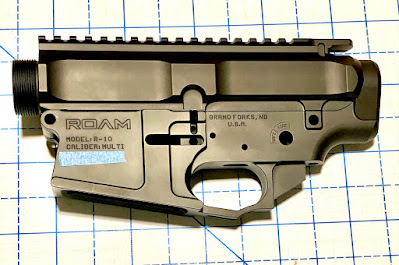
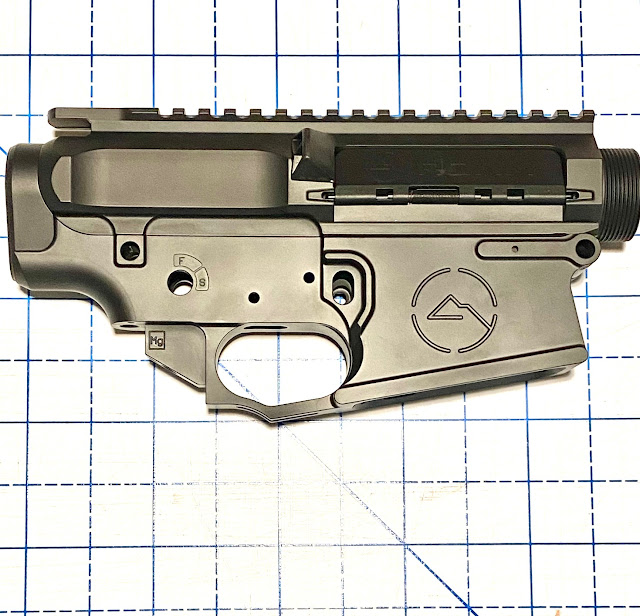
    The Modern Scout Rifle: ROAM Magnesium Receivers

    Back in September of this year I decided to revisit the idea of Jeff Cooper's scout rifle ("The Scout Rifle - Another Look") after seeing a Springfield M1A SOCOM rifle sporting a 16-inch barrel. I've since been reading more about the topic and most recently came across an early article from Cooper outlining his ideas.

        Cooper's idea of a scout rifle was firmly attached in the late 19th and early 20th Century idea of a military scout. In fact, he begins his early article on the subject by quoting an Army definition of scout as "a man trained in the use of ground and cover, movement from cover to cover, rifle marksmanship, map reading, observation, and accurately reporting the results of his observation." Cooper than added that the scout "acted alone, not as a member of a team," and "[b]y choice he did not fight but he had to be an expert at the hit-and-run art of single combat." Such a person--the scout--would be best served by a general purpose rifle. That is, a rifle you would choose if you could only have one rifle. Cooper acknowledged that times had changed and the military no longer made use of true scouts, but believed that a general purpose rifle might still benefit the hunter-rifleman.

        Cooper initially dismissed the semi-auto rifle because, as he put it, they are "overly long, heavy, and bulky, and the volume of fire they afford is of little consequence to a true scout." One can disagree over whether a military scout might need more firepower than afforded by a bolt-action rifle, but it is no longer true that a semi-auto rifle needs to be "overly long, heavy, and bulky." The argument today is one largely advanced by author Richard Mann that the scout rifle is a universal hunting arm that can legally be used in any part of the United States or Africa or (with a change in caliber) anywhere in Europe. Of course, even that isn't true as there are areas of the United States that prohibit the use of bottle-necked cartridges such as the .308 favored by Cooper. And I see the ability to use the rifle in Africa as rather specious since the .308 is not large enough to legally be used to hunt Africa's dangerous game, and, perhaps more importantly, anyone that can afford to go on safari in Africa is not going to be someone limited to just one rifle.

        I do see Cooper's concept has having relevance to the prepper--especially one in a rural area that might legitimately want a hunting weapon that can be pressed into double duty as a defensive rifle. And so as I set out to build a modern scout rifle, I decided on the AR-10/308 style weapon (AR 308 is generally used to refer to the DPMS pattern weapons while AR-10 is generally used for the Armalite .308 rifles, so I will be using AR 308 for the rest of this article). 

        The primary difficulty is that Cooper believed that such a rifle should be approximately 6.5 pounds with sights and sling, but unloaded. As it was clear that 6.5 pounds was probably too restrictive, this requirement became a bit mushy, with the weight limit going up to 7.5 lbs, then settling around 7 lbs.

        Even using aluminum receivers, most AR 308 rifles weigh more than 7.5 lbs., so I would still need to put the rifle on a "diet." The easiest place to shed weight is the barrel. Since Cooper insisted on a barrel less than 19-inches, and this is a weapon intended to be carried much but shot little, selecting a short, thin profile barrel was a no-brainer. I originally was going to get the Faxon 16-inch pencil profile barrel in .308, but wound up getting Faxon's "Big Gunner" 16-inch barrel. My reasoning was that the "Big Gunner" was only a few ounces more but had slightly thicker material around the base of the barrel which would help with heat dispersion. I decided the trade-off was worth it.

        But beyond the barrel, loosing weight generally involves using exotic materials and/or special machining or cuts to reduce weight. And much of it costs. 

        I decided on a couple of requirements when selecting components. First, I did not want a rifle that was excessively expensive, so I decided that I would try to stick to components that cost no more than 150% or so of "normal" or "standard" components. Second, I did not want to sacrifice strength and reliability. 

        So, after selecting and purchasing a barrel, I decided to look at what I could do in the receiver department. Unfortunately, there is not the selection of lightweight receivers for the AR 308 as there are for the AR 15 style rifles. For instance, I was not able to locate skeletonized receivers. Not that I would have chosen one because it would have bumped up against my second criteria of not wanting to sacrifice strength and reliability. I found a company selling a polymer lower, but could not find enough information on its long term durability. Another company sold receivers that had lots of lightening cuts to lighten the receiver, but the price was above my 150% of standard components (using Aero Precision as a guide) and they were out of stock. 


        Then I stumbled across ROAM Rifles which not only sells light-weight AR 308 rifles but also sells receivers for the home builder. ROAM makes their receivers out of magnesium which makes them lighter than aluminum but largely retaining the strength of aluminum. The prices were also within my 150% criteria. 

        For instance, the ROAM lower receiver (which comes in Cerakoted black, flat dark earth, or tungsten gray) retails for $299.95 and weighs in at 7.3 ounces versus $204.99 ($224.99 for flat dark earth) and 12 ounces for the Aero Precision M-5 .308 receiver.

        ROAM offers uppers in both a slick sided and one that can accept a forward assist. I decided on the slick sided one which runs $259.95 and 6.8 ounces, versus $149.99 ($164.99 in flat dark earth) and 12.7 ounces for the Aero Precision. The ROAM receiver also came with an ejection port door included, so the price difference wasn't much more than the 150% price difference when including the extra cost for an ejection port door for the Aero Precision receiver.

        So, I spent about $200 extra for the ROAM parts over the Aero Precision, but saved (24.7 - 14.1) or 10.6 ounces. 

        Obviously, I haven't finished my project, so I can't speak yet as to how the ROAM receivers work in an assembled firearm, but the quality appears to be good. The two fit together tightly, but, like the Aero Precision receivers, there is a set screw underneath where the pistol grip fits that allows you to fine tune the fit between the upper and lower. 

        I purchased an AR-10 Armaspec lower parts kit, so I should have these put together shortly.

    Saturday, December 25, 2021

    Joe Harold's "Prepare Today Survive Tomorrow"


    Years ago, I posted a short review of Joe Harold's book, Prepare Today - Survive Tomorrow. This was the book that really introduced me to the world of prepping (or survivalism as it was generally termed at that time).  Although the type of prepping espoused by Harold would now be termed Rawlesian  (after James Wesley Rawles), Harold's book was published over a decade before Rawles started making a name for himself. 

           The hard cover version of the book, shown on the left, was published in 1984 by a company in Utah called Horizon Publishers & Distributors, and that was the version of the book I was given in the mid-1980s and read and read again. It's a great book and I wish there were a PDF version floating around the internet to which I could direct you. 

        I occasionally look around to see if I can find a PDF version, however. No luck yet, but as I did so this last time I came across several Amazon links to used copies, including some that mentioned it coming out in paperback. That puzzled me since I thought that there was only ever the hard cover version. I found a place selling a paperback copy for around $6 and ordered it out of curiosity, and the book on the right in the photograph is what came. 

        The major difference, besides the binding, is the cover. The 1984 version sported a dust jacket showing a nuclear burst over a cityscape with a man in a military style uniform carrying an SKS (a weapon that, ironically, is not discussed anywhere in the book). The same illustration, but in black and white, is on the cover underneath the dust jacket. The newer version was printed in 1999, also by Horizon Publishers. The cover is a reproduction of a painting that appears to show the Wasatch Front down in Utah. Although the 1999 cover is certainly more visually appealing, I think it was an unfortunate choice because it doesn't communicate what the book is about. That is, the older cover at least informs you that it has something to do with a nuclear attack. Just looking at the cover of the second book, you could not be blamed if you thought it was the cover of a novel.

        The back cover on the 1984 version advertises three other books put out by Horizon Publishers on survivalism topics. The back cover of the 1999 version has a summary of the book, reproducing the summary on the inside front flap of the 1984 copy. 

        The 1984 version runs 182 pages while the 1999 version runs 192 pages. The extra pages appear to be largely the result of the publisher switching to a slightly larger font which apparently required that the whole book be re-typeset.  There is a also a short publisher's note on why they hadn't updated the text to reflect the collapse of the Soviet Empire, and the biography of the author had been moved from the back flap of the dust cover on the 1984 version to the end of the book in the 1999 version. Finally, the publisher had corrected an embarrassing error in the original book where two captions had been switched around on the chapter about weapons. I would assume that the publisher probably took the opportunity to correct any other typographical errors in the 1984 version. Finally, a forward and dedication in the earlier volume that were given their own pages were crammed together in the later copy. Thus, the table of contents starts on page 11 of the 1984 version, but begins on page 9 in the later printing.

        Based on the table of contents and quickly flipping through the paperback printing, it does not appear that there are any substantive changes between the books. The topics covered remain the same: 

    1. Our Crisis Today
    2. Needs for Retreat Living
    3. What's for Supper?
    4. Shelter from the Storm
    5. The Three "Rs"
    6. Weapons for Defense
    7. Defense Philosophies
    And, of course, a bibliography and index. 

       Having been published during the height of the Cold War, it is only natural to compare Harold's book to Bruce Clayton's classic, Life After Doomsday. They both were early books on survival and prepping with heavy emphasis on surviving a nuclear war with the Soviet Union and rebuilding afterward. The books are certainly not copies of each other, but rather complimentary. Although Clayton discusses other disasters, he was very much focused on surviving a nuclear war. Harold, notwithstanding the extensive material on surviving a nuclear attack, gave me the impression that he was actually more concerned about an economic collapse and surviving the "golden horde" that would inevitably flow out of the cities. He certainly devotes more space to weapons, making booby traps, and basic tactics than does Clayton. This may simply reflect Harold's law enforcement background and exposure to criminal gangs.

        I also believe that Harold's writing style is a bit more friendly and approachable than Clayton's. Harold's book is a good introduction to the topic for that reason. And that is the final point: Harold's book is intended as a starting point and not as the end-all-be-all on the subject.

        There are plenty of books on prepping today, but far fewer that discuss surviving a nuclear war. And even those that consider a nuclear attack focus primarily on a high altitude blast intended to produce an EMP blast to kill our electrical system rather than an attack involving hundreds or even thousands of warheads being launched to destroy cities, military bases, and missile silos, with the resultant fallout. This is where a book such as Harold's Prepare Today Survive Tomorrow would be a good addition to your library.  It is also a good book for those interested in the history of the survival movement because it gives a peek into what were the main concerns of preppers in the 1980s.

        As a final note, I would also point out that there is a recent prepping book with the title Prepare Today Survive Tomorrow by L.G. Wellington. This is not Harold's book. I'm currently reading Wellington's book and hope to have a review up shortly.

    Thursday, December 23, 2021

    Wednesday, December 22, 2021

    The Docent's Memo (Dec. 22, 2021)


    Ballistic tests show that the bullet essentially destabilizes (yaws) while in flight and enters and penetrates sideways. Penetration seemed pretty good on bare gelatin, but accuracy would be terrible.

    Firearms/Shooting/Self-Defense:

    • "Cold weather shooting considerations" by Massad Ayoob, Backwoods Home Magazine. Ayoob brings together a collection of cautions, tips, and tricks of his own and from readers about keeping your and your firearm in working condition in cold weather. One of the big issues is using a gloved hand while shooting: many trigger guards are too small to admit a gloved finger (at least, not without the danger of inadvertently depressing the trigger), and so much of the the article relates to this topic, ranging from different types of gloves or mittens, to changes in hardware. Your solution will likely depend a lot on where you live. For instance, where I live and because I work in an office, I can most of the time get away with using a lightweight glove that will work with my weapons, even the pistols or rifles with smaller trigger guards. If I lived in other parts of Idaho where the winter weather is more like the upper plains states, I would have to use one of the other options discussed in the article. I will add, however, that you need to experiment and explore what works, and look to make sure that a glove doesn't interfere with the trigger resetting. For instance, I've noticed that the design of revolver triggers on S&W weapons can easily catch or pinch the fabric of a glove.
        Another issue is that lubricants thicken when cold, and could render a firearm inoperable, and so Ayoob recommends keeping the firearm inside a coat close to the body. But you also need to keep it easily accessible even while wearing a heavy coat. Ayoob solution is to use a shoulder holster, but he has collected ideas from others.
    • "TFB Armorer’s Bench: AR15 Gas Rings and Their Maintenance"--The Firearm Blog. A detailed article on determining when your gas rings around the bolt (piston) in your AR15 need to be replaced and how to do it. My only quibble is that the author adds: "When installing new AR15 gas rings take special care to have their gaps randomized and not lined up. Have each of the gas spaced out on one-third of the circumference. If they are lined up then leakage will happen and performance issues may arise." This is a myth (see this Brownell's Smith Busters video). 
    • Some firearms history: ".276 Pedersen And The 'Other' Garand?"--Armory Life. Some of you might not be aware, but following World War I, the U.S. Army became deeply interested in fielding a standard infantry weapon that provided better firepower than the bolt-action rifle. Concurrently, they also wanted a cartridge that would be smaller with less recoil, but just as or more lethal than the .30-06.  The article explains:

        It was already understood that smaller caliber bullets [than .30 caliber] had a higher “lethality index” at close ranges, but as of 1928 that knowledge operated on a theoretical basis only as there had been no practical test using a human tissue analog.

        Since that was the case, a ballistics study was conducted in June and July of that year that would infamously be remembered as the “Pig Board” because of its use of 18 anesthetized pigs as test subjects. Another board in 1930 used anesthetized goats. The outcome of both boards confirmed that smaller caliber bullets inflicted the most damage at 300 yards and that .30 caliber bullets inflicted the most damage at 1,000 yards.

    (Strangely, the Italians had the opposite experience pitting their 6.5 mm rifles against 8 mm rifles used by the Ottomans in the Italo-Turkish War 1911-1912 as mentioned in this video). At the conclusion of the tests, a War Department board recommended adoption of the the .276 Pedersen cartridge. Both Pedersen's cartridge and his semi-auto rifle survived the initial trials. Garand's rifle submission also survived. But the Great Depression put an end to the .276 Pedersen. The military was afraid that Congress would be loath to fund both a new rifle and a new cartridge, so they decided to focus on getting the new rifle. Because Pedersen's design was not as amenable to alteration to use the .30-06, Garand's rifle was selected (it may have also helped that because Garand's design was "in house," the military would not have to pay a royalty to produce the design).

        The common argument concerning why to use the .41 Magnum is that it is a better big game cartridge than the .357 Magnum and a better defensive cartridge than the .44 Magnum. That may be a viable argument if you were only limited to one handgun, and you wanted to use it for both self-defense and hunting. But if you have no such limitation, you have to ask: is the .41 Magnum enough better than a .357 Magnum for self-defense to justify the extra size, weight, and recoil? And is its lower energy versus the .44 Magnum worth it to have a slightly flatter trajectory for handgun hunting? Although the .41 Magnum has hung on for decades, Richard Mann believes that the cartridge is dying and soon will be relegated to the dust bin of history.

        Typically, the faster a handgun bullet is driven, the lower the Point Of Impact (POI) will be on your target with the same bullet. This is the opposite of rifle impact, where the faster the bullet, the higher the POI. Add weight to a projectile traveling the same speed as a lighter one, and POI rises in the handgun.

        For example, zero your .44 Special revolver at 25 yards, shooting a 200-grain bullet, loaded over 7.5 grains of Unique, in a .44 Special case. Your group is dead smack in the middle of the Bullseye. Now, use your same 7.5 grains of Unique with a 250-grain bullet, with the same gun, sight setting and distance. Your POI will be higher than your original group using the 200-grain bullet by 2″ to 3″.

        Why, you ask? The reason is simple. Barrel time. As the bullet travels down the barrel, the muzzle rises in recoil. The more recoil, the higher the POI. The faster the bullet is traveling, the shorter the barrel time, hence, a lower POI.
    • Springfield has announced two new .45 ACP pistols: an XD-M Elite 3.8” Compact OSP in .45 ACP and a very nice looking 1911 Operator pistol. The latter reminds me that Lucky Gunner recently released a video on the topic of why everyone either loves or hates the 1911. I figure I will provide my two cents on that topic. First, and foremost, the 1911 has a cachet that undeniable: it was invented by John Browning; it served the U.S. through two world wars, plus the conflicts in El Salvador, Korea and Vietnam; and it has been pushed heavily by generations of gun writers. Second, the 1911 looks like what a defensive handgun should look like. I don't know if there is some combination of ratios and angles, the clean lines, the fact that we've seen it in so many movies and television shows, or what, but it just looks "right." Third, it is easy to shoot. The trigger design, how the safety falls right under the thumb, the grip angle, make it an easy weapon for most shooters to use. You may not appreciate it until you actually pick one up and use it, but it just feels "right" for many shooters. However, if it doesn't "feel right" for you (whether due to grip angle, size, etc.), there isn't much that can be done. And it admittedly is not a very practical weapon when compared to more modern designs that may offer lighter weight, higher capacity, better reliability, and lower price. 

    Prepping & Survival:

        Imagine that a dog sees the scent like a red fog that hovers over the ground where you just traveled. This will assist you in understanding how to evade one.

        If the wind moves at 3-5 MPH (a gentle breeze) the scent will travel with the wind about 5-15 yards. A stiff wind at 20-30 MPH the scent will travel 100-200 yards off the route traveled. Anything above 30 MPH, the handler ain’t even going to try because your scent has been totally dispersed everywhere and is just plain gone.

    #1 Scent Massing
        Yes, you read that right. Run hard to open the gap between your pursuer and yourself. Then stop and start running in a circle. Slowly run in a spiral until the circle is approximately 50 yards in diameter. This is called scent massing. What you just did placed your scent everywhere. As the dog approaches, they just smell you in every direction. With no clear trail, the dog will simply give up. I actually did this during a training mission with a local sheriff’s department.

        Thirty minutes prior to the track, the handler had been bragging about how he and his bloodhound had just completed a week-old 26-mile track. (That’s NC state requirement to be certified as a bloodhound tracking handler/dog). Not even 15 mins into the track they hit my scent mass and both just gave up. They had no clue what to do or what had happened. Needless to say, the handler was super pissed at me.

        Side Note: Your scent flows off of you the hotter your body gets. That means that your head, sweat, clothing, detergent, etc. are all the scents that make up you as the target. So as soon as you can slow down, do it. Try not to sweat any more than you have to.

    #2 Scent Masking
        I was running rabbit – in this case, I was giving the dog and his handler something to chase/track for training purposes – for a buddy of mine who was a bloodhound handler for a neighboring county sheriff’s department (it was a different agency from the last one.) I had just finished running about a mile when it started to rain. Not thinking anything of it, I threw on my poncho, walked 25 yards in the woods, and sat down.

        I watched for a hot minute while my friend and his dog walked by me about 3 or 4 times. Finally, he called me on the phone and asked where I was. I stood up and scared the crap out of him. When I told him what I had done, he explained to me that I had just taken my scent and put it into a ziplock bag. I totally just scent-masked myself.

        Side note: If you can smell someone without the aid of a dog, then you’re within 25 yards of them. (I figured this out also while stalking deer in the swamps of NC.)

        Whenever you find yourself evading a dog, be sure to use 2 or more tactics to throw the dog off your trail. Unfortunately, what works for a dog, will not work for a human tracker.

        When a nuclear EMP is created we begin at Phase E1. This is a short phase but an intense burst. This is the part that delivers the high voltage pulse and last one to five nanosecond(s)

        Phase E2 is the scattered gamma particles. We can also equate the E2 to lightning in terms of EMP production. This is the easiest to protect against. This lasts anything up to one second

        Phase E3 is different to the previous phases. This is a very slow pulse lasting anything up to hundreds of seconds. This is the one that can destroy power lines and shut down power plants as a result, because we use AC current they conflict with the pulse that is a DC current. Both a nuclear EMP and the sun produce an E3

        A Solar EMP does not produce Phases E1 and E2 when at ground level.

        The CME will hit Earth anywhere from 15-18 hours for fast pulses or last several days if they are slow pulses. Each CME lasts several hours. Each CME can last weeks, depending on the cycle and over a day the sun can produce up to 3 CMEs a day.

        So The Sun could bombard the earth with CMEs for at least a week. This means that anything not shielded from an E3 EMP will not be fixable as long as the pulses keep hitting the Earth. An CME can last as long as the sun is capable of producing the pulse during the event. As long as a continuous pulse is active there will never be any electronics as the pulse will stop any repairs to the electronics. This is also true for man-made EMPs.

        When the sun creates an CME things get worse. The sun is always giving off small amounts of electromagnetic waves – that’s how we see the “The Northern Lights”.

        However if the sun was to bombard the Earth’s magnetosphere with CME pulses, all we can do is move fast to shield our electronics before 18 hours are up. Why?

        It can take 18 hours to 3 days for the pulse to reach Earth when a warning goes out. A CME within the sun’s corona can last up to four weeks.

        While a nuclear-born EMP can keep happening as long as there are missiles to launch, that’s not to mention the radiation.

        After a nuclear explosion and resulting “mushroom cloud” we also experience the results of a nuclear-born EMP, it lasts anything up to minutes, but once over there is nothing to fear from that pulse, just the radiation.

        Now that we understand the different electromagnetic pulses, we should look more at the aftermath as this is also covered in the duration.

        The aftermath will last as long as years, perhaps decades, depending on what was damaged by the pulse, years and decades being especially true for power plants and modern conveniences that have lots of circuits and wires, perhaps we will never recover.

        #1 in my book is always food, and I have covered this topic at great length. Do not waste your money on “survival food.” Even the most affordable companies are absolute scammers for how much you get for what you spend. Usually they work out to 100 to 200 calories per dollar.

        My repeated advice has always been to expect many many times that, and I will re-cover this topic again soon, but for now, if you are looking for true “survival food” that is cost effective, the Mormons are the best source. They sell cases of #10 cans. But instead of it being a little bit of cheese powder mixed with pasta, like say an Auguson farms cough cough, at 50 to 100 calories per dollar, you receive cans of flour, beans, rice, pasta, potato flakes, and other realistic survival foods at roughly 1,000 calories per dollar.

        If you are more of a do it yourself’er, Walmart flour is, right now, about 5,000 calories per dollar. Their 20lb bags of pinto beans are about 2,000, and their rice and pasta are over 1,500. Even Dinty Moore Beef Stew is over 400. For the dry foods, if you want to preserve them for decades, you can get giant mylar bags with ziplocks from Uline, and an impulse sealer on Ebay. I think time is getting short though.

        ... I have anonymized all the details but the general idea remains: four guys (friends) with money have bought a suitably large piece of land in Texas and now want to create a car-free human-scaled town of the kind that I am always writing about.

        In this text I intend to set out the most bare-bone basic premises for how to start a good town, what is needed to build something anti-fragile and sustainable under the above mentioned scenario. I will go back to this text and edit it, add points, or discuss certain aspects deeper in future texts, especially those points that stimulate questions or controversy.

    An interesting read on the practicalities of making a small town that will have the organic feel of an Old World town rather than a modern development. It should be of interest to anyone interested in how to rebuild following a civilizational collapse.


    VIDEO: "Think Legal Weed Cut Down On Crime? Think Again"--America Uncovered (15 min.)
    Cartels are using legalization as cover for their illegal grow operations.

    News & Current Events:

        The warship has been almost totally destroyed by the fire - the latest of a spate of mysterious blazes at top secret naval shipbuilding facilities - with the damage running into hundreds of millions of pounds, say reports.

        Russia says there were no weapons or crew on board the stealth corvette when fire erupted, however, other reports said three crew were injured, with Military.com reporting that two required hospitalisation.
    • Pay no attention to the conspiracy: Instapundit linked and excerpted from a WSJ piece on John Kerry's work to destroy the U.S. oil and gas industry. From Instapundit's excerpt:
        The president’s climate envoy has been pressuring banks and financial institutions to reduce their commitments to U.S. oil and gas companies and join the Net-Zero Banking Alliance, which would hobble the ability of oil and gas companies to increase production. Citi, Wells Fargo, Bank of America, Morgan Stanley, Goldman Sachs and JPMorgan Chase signed on to the alliance this year.

        Mr. Kerry’s efforts didn’t go unnoticed. In April, members of the Senate Banking Committee sent him a letter expressing concern that he had “been pressuring banks to make extralegal commitments regarding energy-related lending and investment activities” that would result in “higher energy costs for American consumers.”

        In May, 15 state treasurers sent a letter to Mr. Kerry observing that he and other members of the Biden administration are “privately pressuring U.S. banks and financial institutions to refuse to lend to or invest in coal, oil, and natural gas companies, as part of a misguided strategy to eliminate the fossil fuel industry in our country.” They urged banks and financial institutions “not to give in to pressure from the Biden Administration.”

    So why haven't the Fed's investigated the Net-Zero Banking Alliance as an illegal restraint of trade? The Alliance boasts of itself:

        The industry-led, UN-convened Net-Zero Banking Alliance brings together banks worldwide representing over 40% of global banking assets, which are committed to aligning their lending and investment portfolios with net-zero emissions by 2050. Combining near-term action with accountability, this ambitious commitment sees signatory banks setting an intermediate target for 2030 or sooner, using robust, science-based guidelines.

        The Alliance will reinforce, accelerate and support the implementation of decarbonisation strategies, providing an internationally coherent framework and guidelines in which to operate, supported by peer-learning from pioneering banks. It recognises the vital role of banks in supporting the global transition of the real economy to net-zero emissions.

        It was co-launched on 21st April 2021 with 43 founding banks and the Prince of Wales’ Sustainable Markets Initiative Financial Services Taskforce.

    Currently, the group counts 97 banks in 39 countries as members. These are not small, insignificant banks. According to the group, these banks control $66 trillion in assets, representing 43% of total global banking assets.

        Section 1 of the Sherman Act provides: “Every contract, combination in the form of trust or otherwise, or conspiracy, in restraint of trade or commerce … is declared to be illegal.” 15 U.S.C. § 1. A consortium of banks agreeing to not loan or otherwise cripple businesses that are not deemed "green" should certainly count as a combination or conspiracy in restraint of trade.

        Eight years ago, a team of researchers launched a project to carefully repeat early but influential lab experiments in cancer research.

        They recreated 50 experiments, the type of preliminary research with mice and test tubes that sets the stage for new cancer drugs. The results reported Tuesday: About half the scientific claims didn’t hold up.
        The city had for months been searching for a new owner for the 1,100-pound monument, which served as the focal point of the white-supremacist Unite the Right rally in 2017. After the city took the statue down over the summer, six proposals on what to do with it were submitted by arts groups, historical societies or individuals, some offering to pay the city as much as $50,000 for the bronze sculpture.

        But the Charlottesville City Council voted 4 to 0 to hand it over to the only local bidder: the Jefferson School African American Heritage Center, a Black-led museum that proposed repurposing the metal entirely.
        According to research led by scientists at Israel’s Weizmann Institute of Science, the human-made molecule hexadecanal (HEX) — which is found in large amounts on baby scalps — triggers aggression in women while blocking it in men. The findings were published this month in the journal Science Advances.

        “We found that HEX has no perceptible odor, but that when you sniff it, it affects the way you behave toward others — specifically, your aggressive responses to others,” Dr. Eva Mishor, who led the study, said in a press release.

        To determine this, the researchers exposed about half of the study’s 130 participants to HEX while the rest received a control. They then gave the test subjects the option to blast a game partner with unpleasant noises of varying intensity. While women exposed to HEX consistently went for the loudest and most unpleasant noises, men who were exposed to HEX consistently chose milder noises than their non-HEX-exposed counterparts.
    The toddler died aged 16 months of cardiac arrest after being punched or kicked by Brockhill in September 2020 using “massive force” on a par associated with “a road traffic accident”, according to the judge. A postmortem revealed previous brain injuries, fractured bones and internal organ injury.

    Although the author makes it clear that he is "not implying that all lesbians are murderers, nor even that lesbians are more likely than heterosexual women to commit murder," I would note that research does show higher domestic violence in same-sex relationships than in heterosexual relationships

        There were only 8.5 births per 1,000 people in China last year, according to the latest yearbook released by the country's National Bureau of Statistics in late November. 
     
        That's the lowest not only since yearbook records began in 1978 -- but also since the founding of Communist China in 1949, according to official data.
     
        The birthrate, which has now fallen to single digits, is the latest troubling sign of China's worsening population crisis, as the country of 1.4 billion people begins to lose its youthful edge.
     
        The country's once-a-decade national census revealed in May that just 12 million babies were born last year -- an 18% plunge from 14.65 million in 2019.
        The number of marriage registrations in China has fallen for seven consecutive years and hit a 17-year low last year, figures from the recently released China Statistical Yearbook 2021 showed.

        A total of 5.87 million couples got married in China in the first three quarters of 2021, down slightly from the same period of last year, according to the data released by the Ministry of Civil Affairs.

        It is expected that the number of marriage registrations in China will continue to decline in 2021, state-run China Daily reported on Wednesday.

    Since out-of-wedlock births are rare in China, marriage rates are closely tied to birth rates; so declining marriage rates bode ill for China being able to reverse its demographic decline any time soon.

        According to the Cato 2021 Speech and Social Media National Survey, of the 2,000 people polled, liberals, even moderate ones, were far more likely to encourage Big Tech-led censorship of their peers on apps such as Twitter, Facebook, and Instagram.

        “This behavior is highly tied to political ideology,” the poll notes.

        While 65 percent of strong liberals, 44 percent of moderate liberals, and 32 percent of moderates testified that they reported another user for “sharing offensive content or false information,” only 21 percent of moderate conservatives and 24 percent of strong conservatives said they did the same.

        In addition to reporting people to Big Tech companies, 80 percent of strong liberals and 68 percent of moderate liberals said they have blocked or unfriended someone for their posts “about politics or science.” Only 48 percent of moderates, 44 percent of moderate conservatives, and 46 percent of strong conservatives reported doing the same.

        The survey also found that “altogether, conservatives are more likely than liberals to have personal or near personal experience of being penalized by social media companies for the content they’ve posted to their accounts.”

    And then there is this:

        ... In a recent poll of 850 private and public college, university, and trade school students spread across the United States, Generation Lab and Axios found “Young Dems more likely to despise the other party.”

        While just 5 percent of young Republicans said they wouldn’t be friends with someone who votes differently than they do, 37 percent of the young Democrats polled said they would end friendships based on voting records. An even higher number of Democrats, 41 percent, claimed they wouldn’t support a business they knew had political allegiances to other parties while just 7 percent of Republicans said the same.

        As we approach the first anniversary of the deadly insurrection at the U.S. Capitol, we — all of us former senior military officials — are increasingly concerned about the aftermath of the 2024 presidential election and the potential for lethal chaos inside our military, which would put all Americans at severe risk.

        In short: We are chilled to our bones at the thought of a coup succeeding next time.

        One of our military’s strengths is that it draws from our diverse population. It is a collection of individuals, all with different beliefs and backgrounds. But without constant maintenance, the potential for a military breakdown mirroring societal or political breakdown is very real.

    Unmentioned is that the only deaths at the Jan. 6 protests were at the hands of the Capital Police. But truth and clarity are not the purpose of this piece. Rather, it is fear that Republicans might do in 2024 what the Democrats did in the 2020 election:

        Imagine competing commanders in chief — a newly reelected Biden giving orders, versus Trump (or another Trumpian figure) issuing orders as the head of a shadow government. Worse, imagine politicians at the state and federal levels illegally installing a losing candidate as president.

        All service members take an oath to protect the U.S. Constitution. But in a contested election, with loyalties split, some might follow orders from the rightful commander in chief, while others might follow the Trumpian loser. Arms might not be secured depending on who was overseeing them. Under such a scenario, it is not outlandish to say a military breakdown could lead to civil war.

        In this context, with our military hobbled and divided, U.S. security would be crippled. Any one of our enemies could take advantage by launching an all-out assault on our assets or our allies.

    The authors argue that to prevent Trump winning the 2024 election and being sworn in as president, the following steps need to be followed. First, that the members of the military be educated as to who is the "right" person to give orders. Second, military intelligence resources must be used to identify anyone who might stray from the accepted orthodoxy. Third, the DoD must wargame the next election to make sure the military can decisively step in and make sure that the "wrong" person is not sworn in as president. Okay, I paraphrased. But it is accurate when you consider that their recommendations are predicated on it being impossible that Trump or another outsider be elected president.

    VIDEO: "Omicron"--Paul Joseph Watson (8 min.)

    COVID News:

    EcoHealth Alliance – Peter Daszak’s controversial group with a long history of collaborating with the Wuhan Institute of Virology – is advising New York on pandemic preparedness and health “equity” as part of the city’s new Pandemic Response Institute.


    VIDEO: "China Crashes Again! Another Evergrande Falls..."--Stoic Finance (14 min.)
    And housing prices have been falling.


    Commentary & Opinion:

    • "What's the Deal With All the Perverted Behavior at CNN?" by Robert C. Smith, Real Clear Markets. The op-ed is about the perversions that are increasingly coming out concerning the leftist elites and how the FBI seems to be covering for them. The author lists plenty of examples and reaches the following conclusion:

    The radical Left simply does not adhere to the secular law or any sort of law that derives from a divine authority. The ends always justify the means. If the Constitution gets in their way, they trash the Constitution. If widely accepted Judeo-Christian values obstruct their plans, they ridicule the faith.  The Left wants to destroy everything that kindles their hatred. They want to be their own deity and sit on a throne of their own making where they are not shackled or feel the need to be obedient to anything but their own narcissism. I think this drives them to engage in the verboten. I think by engaging in the verboten, this solidifies their belief in their godlike status and their victory over the old God who they never wanted to obey.

    Smith is not wrong. But the Left have long been this way, whether it was the "free love" movement of the late 19th and early 20th Century, the "sexual revolution" of the 1960s and 70s, and all of the way up to the present. What has changed is that such behavior now has the de facto imprimatur of the government. That is why the FBI knows about it but fails to act, or conveniently "loses" key evidence. But is the FBI's acts or inaction because they enjoy the ability to blackmail others, or is it because cliques of agents are involved in the same type of perversions and so they are protecting their own? It is certainly suggestive when we learned that one of the FBI agents involved in the Governor Whitmer case "was charged with beating his wife when they returned home from a swingers party."

        There are many reasons people join Black Axe. Some recruits are forced, others volunteer. In Makoko, a vast slum built on wooden stilts above Lagos Lagoon, we interviewed a number of Axemen, some of whom said they had joined against their will. Their loyalty, nevertheless, was strong - cemented by the spiritual bond of the initiation process.

        "We worship Korofo, the unseen God, and he has always guided us," the leader of the group told us, sitting in a small wooden building, surrounded by an entourage of Axemen. He said he was "proud" to be a member of Black Axe, despite saying he was forcibly recruited by a police officer. Another member claimed he joined after his father was killed by a rival gang. No matter how or why members join, many of them claim there are benefits.

        "Secrecy, discipline and brotherhood," a cult member told us proudly during another interview in Lagos in April 2021, when we asked why he had joined Black Axe. He claimed he made good money through the group's criminal enterprises - better than he would earn working in a bank.

        "Nobody will be able to touch you - once you belong to a cult, they will protect you," said Curtis Ogbebor, a community activist based in Benin City, who tries to stop young people joining groups like Black Axe. "The process of initiation - it's all about networking."

        Dr Stone says many Axemen join solely for networking purposes. Nigeria has the second highest rate of unemployment in the world, and within this challenging environment, he says joining Black Axe can provide protection and business connections. He claims not all members are criminals.

        "We have members in the Nigerian army, navy, air force. We have those in academia. We have priests, pastors," he said.

        This mutual support was key to Black Axe's original purpose. The group grew out of a student fraternity called the Neo Black Movement of Africa (NBM). It formed at the University of Benin in the 1970s. The NBM's symbol was a black axe breaking chains, and its founders said their aim was to fight oppression. The NBM was inspired by the anti-apartheid struggle in South Africa, but in structure, secrecy and brotherly commitment, it mirrored societies like the Freemasons, which had a presence in Nigeria during the colonial era.

        The NBM still exists today, and is a legally registered company with the Nigerian corporate affairs commission. It claims to have three million members around the world, and regularly publicises charitable activity - donations to orphanages, schools and the police, both in Nigeria and abroad. It holds huge annual conferences, some of which have been attended by prominent politicians and celebrities.

        Leaders of the NBM claim Black Axe is a rogue, breakaway group. Publicly they strongly disassociate themselves from the name and are adamant that the NBM opposes all criminal activity.

        "NBM is not Black Axe. NBM has nothing to do with criminality. NBM is an organisation that tends to promote greatness in the world," says Olorogun Ese Kakor, the current president of the organisation, in an interview with the BBC in July 2021.

        The NBM's lawyers told us anyone from Black Axe who is found to be a member of NBM "will be expelled immediately" and that they have zero tolerance for crime.

        International law enforcement have a different view. Statements by the US justice department, in the course of its prosecution of Black Axe members since 2018, say that the NBM is a "criminal organisation" and "part of the Black Axe". Similar statements have been made by authorities in Canada, who have said the NBM and Black Axe as "the same".

     
    VIDEO: "Is Jesus Historical? What Do The Romans Say About Him?"--Metatron (29 min.). An examination of non-Christian references to Christ that were near contemporaneous and support at the least the Biblical account of Christ being tried and executed by Pontius Pilate. 

    And Now For Something Completely Different:
    • "Revenge of the Apes: Monkeys in Maha's Beed On a Murderous Rampage After Dogs Kill One of their Infants"--News 18. After dogs in the town killed one of the monkey infants, the monkeys went on a killing spree by attacking dogs, hauling them to a high place, and dropping them to their deaths. Government wildlife officers were called in to do something, but couldn't even catch one of the monkeys. After the townsfolk tried to stop the monkeys, the monkeys widened their net of retribution by now targeting children (although no children have been killed). The article ends:
    Monkeys have killed almost all the pups in the village and now, villagers say that there are hardly any pups left in their village. But monkeys have not stopped. Troops have started targeting small kids. School-going kids are being attacked by the monkeys and this has created panic among the villagers. 

    Kfs [potassium feldspar] is a powerful ice-nucleating aerosol, yet is normally rare in atmospheric dust mineralogy. Ice nucleation plays an important part in cloud microphysics, which modulates the global albedo. A conceptual model is proposed whereby the anomalous presence of Kfs post impact is posited to have two key effects on cloud dynamics: (1) Kfs reduces the average albedo of mixed-phase clouds, which leads to a hotter climate; and (2) Kfs weakens the cloud albedo feedback mechanism, which increases climate sensitivity. These mechanisms offer an explanation as to why this otherwise benign mineral is correlated so strongly with mass extinction events: every Kfs-rich ejecta blanket corresponds to a severe extinction episode over the last 600 myr. This model may also explain why many kill mechanisms only variably correlate with extinction events through geological time: they coincide with these rare periods of climate destabilization by atmospheric Kfs.

        Some of the objects are nondescript, and just lumps of metal. Mostly, there's nothing unusual about them except that everywhere you look in the metal, the composition is different, which is odd. It's what we call inhomogeneous.  That’s a fancy way of saying 'incompletely mixed.'  The common thing about all the materials that I've looked at so far, and there's about a dozen, is that almost none of them are uniform. They're all these hodgepodge mixtures. Each individual case will be composed of a similar set of elements, but they will be inhomogeneous. 

        One of the materials from the so called Ubatuba event [a UAP event in Brazil], has extraordinarily altered isotope ratios of magnesium. It was interesting because another piece from the same event was analyzed in the same instrument at the same time. This is an extraordinarily sensitive instrument called a nanoSIMS - Secondary Ion Mass Spec. It had perfectly correct isotope ratios for what you would expect for magnesium found anywhere on Earth. Meanwhile, the other one was just way off. Like 30 percent off the ratios. The problem is there's no good reason humans have for altering the isotope ratios of a simple metal like magnesium. There's no different properties of the different isotopes, that anybody, at least in any of the literature that is public of the hundreds of thousands of papers published, that says this is why you would do that. Now you can do it. It's a little expensive to do, but you'd have no reason for doing it. 

        Earlier this year The War Zone exclusively reported about a series of 2019 incidents that involved unidentified drones stalking US Navy vessels over several nights in the waters off of Southern California. Our initial report also covered the Navy’s investigation into the incidents, which appeared to struggle to identify either the aircraft or their operators. Chief of Naval Operations Admiral Michael Gilday later clarified that the aircraft were never identified, and that there have been similar incidents across the service branches and allied militaries.

        Newly released documents obtained via the Freedom of Information Act (FOIA) show that the full scope of these drone incursions was greater than it initially appeared, and they persisted well after the Navy’s investigation was launched. Deck logs indicate that drone sightings continued throughout the month of July 2019 and included events where drone countermeasure teams were called into action. One notable event involved at least three ships observing multiple drones. Uncharacteristically for unclassified deck logs, the details on this event are almost entirely redacted. 

    Do I Get Involved?

    " Do I Get Involved in What Is Happening in Front of Me? "-- USA Carry . The article begins: Many people ask me if they need to g...