Showing posts with label Heating. Show all posts

Sunday, September 27, 2026

Gun & Prepping News #100

Some links that may be of interest: 

  • "Mexico’s Government Funds Gun Grabbing Group"--Battleswarm Blog. Noting that "[t]he organization, Global Action on Gun Violence, has documented connections to Democratic lawmakers. It featured Rep. Dan Goldman in a gun-trafficking discussion⁠ promoted in its May and June 2025 newsletters and endorsed legislation backed by prominent Senate Democrats."
  • "Evaluation of Defense Shooting Skills"--The Tactical Wire.  Rich Grassi explains:

    If your only assessment is the state qual course and you do that 1-to-4 times a year, does that really make you qualified? It does check a box, but it’s a minimum standard. The scoring area is vastly larger than it should be, the time you’re allowed is too long and, on the whole, judgement and discretion are never evaluated. 

    So how would a different shooting course help? 

    It’s an attempt to measure basic needed skills with a time constraint as well as allowing the instructor to evaluate gun handling – a critical aspect of the job. 

    The 5x5 classifier can be downloaded as a pdf here. It doesn’t have to be the IDPA 5x5 classifier, that’s just an example. 

    The first trip saw use of the Ruger Mark IV Target; 5.5” bull barrel, metallic sights, the rear adjustable for elevation and windage. The gun has Hogue, Inc. “G-Mascus Green” G10 stocks in place of the factory stocks. Otherwise, there are no modifications.

    The ammunition I selected, based on concerns about indoor ranges and lead ammunition, was CCI CLEAN-22.  While it’s geared more to prevent barrel fouling and making a suppressor easier to clean, I reasoned that it could be a bit more healthy than uncoated lead projectiles. 

    I’m still careful to make use of hand cleaning wipes that are made to remove contamination of this sort. 

    Using a B-8 repair center for each segment, I’d shoot a pair of stages right-handed, replace the target and shoot a pair left-handed. 

    When trying to learn a physical skill like shooting, it’s good to work “mirror image” to get back to being a complete duffer and to iron out bad habits. 

  • "The 'Lost' Art of Revolver Reloading"--Guns Magazine. Brent Wheat not only gives detailed instructions on how to do speed reloads for revolvers, but also explains why to use the left hand to hold the revolver when doing so. The article also covers the different between speed reloads (i.e., when speed matters like in combat or competition and using speed loaders), tactical reloads (i.e., removing spent cartridges and replacing them from speed strips or loose rounds), and an administrative reload (when time is not a concern). Explaining why to use the left hand to hold the revolver:

    A revolver cylinder is a floppy thing when it isn’t locked into the frame. On a square range, with your feet planted and your hands working exactly as you command, it’s not much of a problem. But a defensive reload may happen while you’re moving, running, fighting or ‘merely’ trying to keep your balance on a loose, slippery or uneven surface. I can also guarantee you’ll be dealing with an adrenaline dump that might leave your hands shaking like a toy poodle on meth. Now you’ve got to line up a half-dozen fresh cartridges with a cylinder that is moving around at the end of your arm.

     You might be able to get a finger into the cylinder opening to stabilize it — or you might not, because keeping a semblance of a firing grip makes it awkward. Worse, the cylinder could even relatch itself while you’re trying to get everything lined up.

    This is also why the support-side reload was traditionally taught to police officers back in those days when we rode dinosaurs on patrol. It wasn’t because somebody decided it was the fashionable way to reload a revolver; instead, hard-won trial and error proved the technique provided a more stable platform for manipulating the gun under less-than-ideal circumstances.

  • "Minimizing Defensive Shotgun Recoil"--Shoot-On.  The tips include (i) using reduced recoil rounds (although the author specifically recommends against using mini-shells); (ii) using a stock that properly fits you and has a recoil pad; (iii) use a gas-operated shotgun; and (iv) adding a recoil reduction system to your stock.
  • Going from something with heavy recoil with something quite a bit less: "The Defensive .32 ACP – The Ammo"--The Truth About Guns. A couple tips. First, the author advises avoiding hollow-point ammunition for a couple reasons: (i) if the bullet expands, it will slow it down enough that you lose too much penetration; and (ii) the shorter overall length makes it more likely you will experience "rim lock". Second, he recommends sticking to European ammunition, explaining:

    The American SAAMI standard for .32 ACP specifies a maximum average pressure of 20,500 PSI. The European CIP standard is higher, at roughly 23,200 PSI. That doesn’t mean every European load is automatically hotter, but it does give European manufacturers more room to load the cartridge toward that higher pressure limit.

    If you’re using a European pistol designed for European .32 ACP, it might malfunction with the weaker American stuff. With that said, my various European-designed surplus .32s haven’t had any problems with American-spec .32 ACP from Remington or Aguila. 
 

    There is another reason I like the European-loaded .32 ACP. It has a much more aggressive bevel near the rim and a deep groove for the extractor. The aggressive bevel acts more like a ramp, helping prevent rimlock and improving extraction. 

    ... It’s designed to carry two handguns along with spare magazines and accessories. The case is 8.75 inches high, 11 inches long, and 3.5 inches deep, which makes it big enough for full sized service pistols. It’s still relatively compact though and would fit inside a patrol bag, ruck or larger range bag. The case is made from 1050D nylon and is fully padded to help protect your firearms during transport.

    Each pistol has its own zippered compartment, and there are three elastic magazine loops on the outside of each compartment. 5.11 uses lockable YKK zippers that open on three sides so the case lays flat on the shooting bench, making it easy to get to your gear. Reinforced grab handles are provided for carry There’s also a name tape panel on the outside, although its a smooth strip so I don’t really know how that works. Maybe write on it with a paint pen? The double pistol case is available in gray or black and has an MSRP of only $40. It’s on sale for $30 on 5.11’s site at the time I’m writing this. 

    First, assess your situation. Who are you getting away from—and why? Is it an abusive ex, online harassment, a business rebrand, or you just need a hard reset? Rank the threat: capability, reach, motivation, resources, and timeline. If it’s criminal danger, consider involving an attorney and—where appropriate—law enforcement or a victims’ advocate group. If it’s reputational heat, you’re playing a different game. Hopefully you won’t have multiple governments and organized crime after you like I did but stay tuned for the full playbook either way. Step one is to identify the problem before you try to solve it.

    Second, assess your resources and skills. Disappearing means transition, and transitions incur costs. Cash buys time. Skills buy options. Can you work with your hands? Build? Fix? Cook? Drive? Speak another language? The more value you can offer quietly and locally, the less you need to advertise yourself to survive. If money is tight, lean on skills. If skills are thin, learn fast.

He also has some warnings of how people mess this up, including:

Let’s talk about mistakes that get people burned. Breaking routine to chase fun in high-signal places. Oversharing because loneliness bites. Letting anger write checks your freedom can’t cash. Reconnecting with the same crowd that caused the problem. Slipping back into old usernames, old numbers, old patterns. The little compromises add up. Don’t feed the trail. 

  • "How Long Can You Store Water? The Ultimate Safety Guide"--SHTF Preparedness. According to the author, "[c]ommercially bottled water, when sealed and kept in a cool, dark place, can remain safe almost indefinitely, while stored tap water is typically recommended to be rotated every 6 to 12 months." But the type of material for the storage container, the environment that the water is stored in, and handling (or mishandling) can effect how long it can be stored. For instance, if a water container is opened, there is always the risk of introducing contaminants which might encourage bacterial or algae growth. 
  • "How to Stay Warm Indoors When the Power’s Out (& It’s Freezing Outside)"--More Than Just Surviving. Obviously, if you have alternate methods of heating, you will have an easier time than someone with more limited options. For instance, I have both a large kerosene heater and a carousel fireplace in a relatively small house, so I know from experience that I can keep my home comfortable even in the coldest of weather if, for some reason, the central heating fails. But what if you don't have these advantages? The primary point from the article is forget about trying to heat your entire residence, but instead focus on keeping a small area warm:

    If everybody’s in one room with the door closed and that room has got as many blankets, jackets, coats, pets, and whatever else you have at home to keep y’all as warm as possible, you’re going to have a lot easier of a time trying to stay warm by comparison to trying to heat multiple rooms.

    When it comes to sleeping, you don’t need to share a bed if you don’t want to, but if it’s not something you mind, why not? If you’re not into sharing a bed, drag extra mattresses or sofa cushions into your room of choice and have everyone sleep separately, but by being in the same room, you’re making sure none of your individual bodies’ heat production is going to waste – it’s helping to keep the room warm.

And if you don't have alternative heating methods, the author recommends that you go further and set up a tent in your "warm room" to further make it easier to keep an area warm. He also recommends staying in sub-zero rated sleeping bags and lining your tent with Mylar emergency blankets. He has some other tips, so be sure to read the whole thing. 

    I wrote in January about how, after moving out of L.A., where I lived for the first 30 years of my life, I've been able to see the city's decline more clearly whenever I go back for family visits or appointments every few months. I noted that "just as friends who haven’t seen your kids for a while recognize how much they’ve grown — much more than you, who are with them every day — whenever I drive into Los Angeles once every couple of months, the deterioration of the city is more evident. Many parts truly feel third-world."

    In that article, I focused on L.A.'s homelessness crisis, which can be seen under freeway underpasses, in city parks, and even in reports of homeless people getting into strangers' cars to sleep. This is not only visually disturbing but also anxiety-inducing. You never know how dangerous a homeless person might be, whether high on meth or suffering from severe mental illness. 

[snip]

    Comedian Bridget Phetasy, who recently returned to Los Angeles after years away, described a similar sensation to the one I feel upon returning: "It's like when you see someone and they've, you know, lost a lot of weight and they don't see it because they see themself every day and you see them and you're like, whoa. Right. That's how it feels."

    Phetasy used the word "unsettling" to describe "how much commercial real estate is empty." And she chose as an example a place where I spent many a happy day in both my childhood and young adulthood: Santa Monica's Third Street Promenade. The three pedestrian-only blocks were a favorite destination for so many in the '90s who wanted to catch a movie, grab dinner, shop, or watch street performers. 

    A California Post report earlier this year noted that the Promenade’s vacancy rate is now 25% and that the popularity of the destination began to decline because of the homelessness crisis, then fell further during COVID and the looting inspired by the “Summer of Love” following George Floyd’s death. 

Sunday, November 30, 2025

Gun & Prepping News #57

 Just some gun and prepping related links that I thought interesting or useful:  

  •  "Red Dot vs. Iron Sights: Which is Better?"--Shooting Times. Richard Nance and James Tarr take different positions on whether you should have a red dot sight on a carry gun. But beyond the reasons each gives for his position, there are some shooting tips. For example, Tarr writes:

Struggling to find the dot? If you’re struggling to find the dot, it probably has to do with an improper grip or inconsistent presentation. The most common problem is the dot being above the optic window. Camming your support side wrist forward should bring the dot into view. Drawing the gun up high from the holster before driving it out to the target (picture an upside-down L) puts the dot in front of your eyes longer, so you can see it sooner. If you drive the gun out and there’s no dot, grip the pistol more tightly. This will likely bring the dot into view.   

  • "Master the Basics"--Shooting Illustrated.  Steve Tarani goes over hold/control of the handgun, presentation and aligning the muzzle, and recovery. On the latter skill:

    Recovery is where the wheels often come off, even for shooters with copious rounds down range. The moment the gun recoils, everything the shooter just built—grip, hold, sight alignment, trigger control—must be sustainable without conscious thought. A higher-percentage success rate of that process is what separates a ‘safe shooter’ from a deployable one.

    The novice fights to find the shooting process; the professional follows it.

    Successful recovery means the muzzle finds its way back to the same visual index every single time, with the shooter already prepared for the next shot before the first one has fully settled.

    To build this, novices must isolate the pattern: lift, settle, return. At first it appears mechanical, even exaggerated, but repetition sculpts it into an efficient neural pathway. Once the pattern is reliable, speed develops naturally as a byproduct of efficiency.

    For the high-performance shooter, recovery drills become tests of consistency under compression—stringent par times, more technical targets and tighter accuracy requirements. The goal is identical at both ends of the spectrum: to make recovery a subconscious, competent and repeatable cycle that fails to collapse under pressure.

    As we learn to get a good sight picture and press the trigger smoothly, small guns such as the Ruger LCP Max or Glock G43 can be shot accurately at much further than just an arm’s length distance. We can practice such shooting with courses of fire that challenge our marksmanship at longer distances, with smaller targets, and shooting with one hand. While most defensive gun uses take place within seven yards, on a full-size target, and allow us to shoot with both hands, that’s not universally true. It’s worthwhile to have an understanding of how well you can shoot your pistol beyond a car length.

    This is a practice session of just under a box of ammo (47 rounds) that provides three different benchmarks for your ability. It includes shooting with one hand, shooting at a smaller target, and shooting at longer distances.
  

  • "Ruger's New LCP Pistol Offers 'MAX' Protection"--Shooting Times. A review of the Ruger LCP Max with a manual safety as well as instructions on how to switch the magazine release from being for right handed shooters to left handed shooters. And this:

Some of you reading this might ask, “Why would I want a small .380 ACP pistol when I can have a slightly larger 9mm?” Shooting Times writer Layne Simpson wrote an entire article on that back in 2018. I encourage you to look up that report because it’s full of very good information, but I’ll condense it for you here. Size and weight, as in the size and weight of the gun. A .380 ACP pocket pistol is just about the smallest and lightest handgun that still shoots an acceptably potent round for self-defense. ... 

  • "Blind Faith – A Low Light Drill by Mike Boyle"--Snub Noir. This is a drill to practice low light shooting, using steel targets (although the author indicates that paper targets can be substituted). "Two 6 round magazines or a fully loaded 6 shot revolver with a speedloader. The shooter will also need a hand held or weapon mounted light."
  • "75Gr Hornady TAP On Deer"--Scattered Shots. The author had been deer hunting with a 5.56 using the 75gr TAP ammo, and shares photographs of how it performed on a body shot (and it did very well). 
  • "Marlin 1894 Trapper 10mm Automatic Overview"--Field & Stream. Marlin's 1894 is the only lever action rifle (so far, anyway) offered in 10mm. The author tested velocity and accuracy at 100 yards with several loads. As expected, the Lever Evolution rounds offered by Hornady did better at range than other loads. However, the author concludes:

And that brings up the question of what the 10mm Trapper is for? Clearly, its deer and feral hog capable out to about 100 yards, but as a stand-alone purchase, a Trapper in 357 or 44 Magnum might make more sense. On the other hand, if you’re a 10mm guy and already have a 10mm revolver or pistol, I don’t know how you’ll be able to resist this handy little carbine. 

One of the concerns I have with semi-auto pistol ammo in carbine barrels is that the cartridges tend to peak in velocity at barrel lengths shorter than the length of barrel in a carbine. For instance, in this case, the 1894 Trapper reviewed in the foregoing article has a 16.1 inch barrel, but when you go to Ballistics By The Inch for 10mm, you will see that the across multiple loads, the maximum velocity is at 13" to 14". Loads like the .357 Mag. and .44 Mag really do take more advantage of the longer 16" or 18" barrels.  

    Eddie Penney is the CEO of Contingent Group, author of the great book, “Unafraid,” and a retired SEAL Team Six guy with seven deployments under his belt. He’s breached more than his share of doors, and inasmuch, advises the average, untrained, home defender that strong and repeated “mule kicks” to the door may be the best bet. He’s referring to the kicking style where you face opposite of the door, bend over and kick out and backward.

    But, he says that if a mule kick doesn’t work, a well-placed shot or shots from a shotgun will often open a door right up. He says the best way to open a locked door with a shotgun is not by shooting for the hinges, but for the bolt of the locking mechanism, where the bolt enters the door frame.

    “Go for the locking side,” said Penney. Then, he advises to jam the shotgun’s muzzle into the door jamb, where the door meets the frame, just above where you think the deadbolt should be. Angle the barrel down 45 degrees and toward the door at 45 degrees so the shot will strike the bolt where it enters the door frame. Angling the gun down and away will also minimize the chance of debris—spall—going into the room. Then use your shoulder nearest the door to shield your head as you look away. With the shotgun held firmly in place, pull the trigger.

    “Take a shot then try to push or kick the door open,” said Penney. If it still won’t open, your first shot probably made it easier to see where to better aim your next shot, so try it again. Plenty of times the bolt will be blown right out of the door, or the doorframe will be destroyed, allowing the door to freely swing open. 

The military and police typically will use special breaching rounds, but Penney indicated that if they didn't have the special rounds, they would use bird shot--the smaller the better.  

  • "Best Long Range Cartridges"--The Firearm Blog.  By "long range," the author means 800 to 1,000 yards. As you would expect, the author believes that the best all round cartridge for long range shooting is the 6.5 Creedmoor. He considers the .308 to be the most versatile "because it's available everywhere, and because it has been available in so many military and civilian contexts for so long, there are lots of competition opportunities to use a .308." The best for the AR15 platform is the 6mm ARC. The best for hunting is the .300 Win Mag, according to the author. And the best big bore is the .338 Lapua. 
  • "What is the Best Barrel Length for 6mm ARC?"--Ballistic Advantage Blog. If you do not know much about the 6mm ARC, it was a cartridge designed for the military to give long range capabilities to the AR 15 sized platform--it can stay supersonic out to 1,000 yards depending on the bullet and load. But as to this article, it's not an issue of which barrel length is the best, but what is the best length for different applications. The article indicates you should use a 24" barrel for long range shooting; 20" for hunting or target shooting; 18" for most military applications but is also suitable for hunting. Sixteen inches is the shortest they recommend without too badly compromising the cartridge's capabilities. 
  • "Best .308 Barrel Lengths: Is 16 Inches Too Short?"--Firearm News.  The author writes:

 In conclusion, yes you do indeed give up some velocity dropping from a 22- or 24-inch barrel to a 16-incher. However, it’s probably not as much as you would think. Is the trade-off worth it? Now, that is the important question. In the case of a lightweight carbine, which will be used inside 600 yards and primarily inside 300 yards, a 16-inch barrel makes a lot of sense. It is significantly shorter, handier, easier to maneuver and easier to get in and out of vehicles with. The shorter barrel is a real plus if you plan on mounting a sound suppressor. In the case of Ruger’s SFAR, it makes for a very quick handling package that is easy to carry over hill and dale.

  • "The Priorities of Survival"--Revolver Guy.  The author was working on a presentation intended to "focus on a handful of law enforcement gunfights involving officers armed with revolvers, and identify some 'lessons learned' for armed citizens who are similarly equipped," and offers some thoughts to readers about Massad Ayoob's "Priorities of Survival" model,  akin to Maslow's Hierarchy of Needs in that the most basic and primary needs are at the base of a pyramid and moving up to more refined points. At the base of the Priorities of Survival pyramid is "mental awareness and preparation," then "tactics" above it; then "skill with equipment"; and, finally, at the top, "equipment". 
  • "Dark Arts For Good Guys: Think Fast!"--Straight Forward In A Crooked World.  The author begins:

    There is a problem we (society in large) face in trying to thwart,fight,and kill the badmen of the world.

    As the "Good" we have concluded that there is unofficially mandated fair play and ethics into trying to fight off those who commit evil.

    When I teach on how to defend against mass shootings I tell my students that they have to get their head around shooting an attacker in the back. And turn the targets around for them to do so.

    Being in a prolonged gunfight with multiple attackers is not the same fight as with a home invader. You shooting a man in the back as he runs for the front door is at best manslaughter. Understanding that firing into the back of a gunman as he walks around executing people lying on the floor is called tactical advantage and justified. Just as it is for any S.W.A.T and HRT Sniper.

A tarp shelter is a versatile and affordable solution for camping and outdoor enthusiasts looking for a lightweight and easy-to-set-up shelter. Tarp shelters can be used in a variety of ways, from a simple overhead cover to a fully enclosed tent-like structure. With a little creativity and some basic knowledge of knots and rigging, you can create a comfortable and protective shelter that will keep you dry and comfortable in any weather.

He covers four types of tarp shelters, tips on selecting the right tarp, equipment/supplies you will need, anchoring techniques, tips on maximizing comfort and protection, etc.

    Plenty of attention is given to the things you should do when disaster strikes, but knowing what not to do when disaster strikes can be just as important. During a crisis, emotions run high, logic often takes a backseat, and panic can override even the best survival plan. One bad decision in those early moments can have serious consequences.

    That’s why it’s critical to mentally prepare yourself not just for action, but for inaction. Prepare yourself for the things you must resist doing, no matter how tempting they may be.

The first four things to NOT do are: (i) panic; (ii) stare at the TV; (iii) decline government aid; (iv) bug out to the woods. Read the whole thing. 

    Many of us mix things here about survival, things that you have to have to survive, things that are important, less important, comfort vs. necessity and similar – it is a huge topic.

    But for this article, we need to understand that things are just like that – things. Yes, they make our life easier. But believe it or not, life is possible without many things. The final result here for many preppers is gonna be the fact that they might die, because they will value too much their physical preps, and they may fail to recognize the moment when they need to leave everything and run.

    It is very easy to fall into that trap – to start to value your preps so much, you collected those things so hard, you invest your money into food stash, into 10 different kinds of weapons, into a bug-out vehicle, into a cabin in the woods.

  • "How Long Will a Buddy Heater Run on 1 lb & 20 lb Propane Tanks? (Run-Time Chart & Tips)"--Modern Survival Blog. The Mr Heater Buddy is one of the most popular propane heaters for emergency use, temporary heating of a garage or workshop, or even for taking camping. The author gives times for both the Buddy heater and the Big Buddy heater, and gives times for running at low, medium (for the Big Buddy) and high settings. For the Buddy heater, the run time on a 1 lb. bottle is between 2.4 to 5.4 hours; and using a 20-lbs. tank, it is between 41 and 92 hours. He has a lot more information on BTUs, the best use for the Buddy versus Big Buddy heaters, and how to hook them up to 20 lbs. tanks. 

Tuesday, September 9, 2025

VIDEO: Hobo Heater

A lot of old fire place and stove designs used heating a mass (of rocks, clay, etc.) as part of the design because that mass would re-radiate heat over an extended period of time. It beats having to wake up every hour or so during the night to stoke a fire or add more wood. This uses the same principle by heating up sand in a bucket that, it appears, has enough heat for a small tent or shelter. 

 VIDEO: "1930s Non Electric Hobo Heater – DIY Survival Heat Source!"
WayPoint Survival (13 min.)

Monday, March 24, 2025

VIDEO: Starting A Fire In The 18th Century

The video from Townsends notes that the methods of starting a fire in the 18th Century had changed little over the prior 2,000 years: mostly flint and steel or a fire glass (a small magnifying glass). Although he mentions the fire piston, it appears to have been a then recent import from Southeast Asia, and probably not widely used in Europe and the Americas. In a few decades, matches would completely replace these older methods. The video goes over a bit of the history of firemaking and the equipment used, before showing how to make char cloth and getting the tinder going.

VIDEO: "How To Start A Fire In The 18th Century"
Townsends (13 min.)

Friday, August 20, 2021

The Realist: Mr. Heater Big Buddy Radiant Heater

This is a guest post from The Realist. He sends:

The Big Buddy heater in operation, supplied by a 
common 20-pound propane tank.

Disclaimer: All products mentioned in this review were purchased by myself. I did not receive samples, evaluation models, or other compensation from any manufacturer or retailer. I have no formal relationship with any manufacturer or retailer mentioned in this review - I have only been an arms-length customer. All brand names and product names used in this review are the trade names, service marks, trademarks, or registered trademarks of their respective owners. Further, this review reflects my unique circumstances and subjective opinions with regard to performance and other characteristics of the products being reviewed. Your mileage may vary.

    February 15, 2021 my home in the Dallas-Fort Worth area lost power for twenty-eight hours during the two coldest days in several decades. I described my experience in the article "The Realist: The Texas 2021 Winter Storm" (http://practicaleschatology.blogspot.com/2021/03/the-realist-texas-2021-winter-storm.html). One of the lessons from that event was that I needed a heat source that could keep the central portion of my house warm during similar conditions in the future.

    As soon as the power came back on, I started looking for emergency heating solutions for my home. I talked with friends and coworkers, watched YouTube videos, and did a lot of online research. Two heating options presented themselves: a kerosene heater or a propane heater.

    Many people I talked to recommended kerosene heaters, and I have used a small one in the past. Other people I talked to recommended propane heaters.

    Based on my past personal experience, I was less than satisfied with kerosene heaters. Replacement wicks were hard to find at the time. Kerosene was and is hard to find in my area. And, even though my kerosene heater burned with a nice blue flame, it emitted an odor that my family did not like. So, I decided against a kerosene heater.

    I have also had experience with small propane heaters, and have been happy with their performance. Propane heaters emit very little odor. And, propane is readily available.

    I looked at propane heaters that attached to the top of 20-pound propane cylinders and heaters that sat on the floor and got their propane from a cylinder through a hose. I eventually settled on the Mr. Heater Big Buddy radiant heater, model MH18B (https://www.amazon.com/dp/B07Q82MG8S/), after seeing it used in several videos by Canadian YouTuber Steve Wallis (https://www.youtube.com/c/thestevewallis).

    After deciding on the Big Buddy heater, it took several months to find one in stock for less than scalper prices. I was finally able to purchase one mid-July.

Mr. Heater Big Buddy MH18B

    The box the Big Buddy heater came in plainly states it is "indoor safe." The Big Buddy heater can produce 4000, 9000, or 18,000 BTU per hour. It can operate from either a large propane cylinder, or one or two one-pound disposable cylinders. Heat is produced from one or two ceramic "tile" burners on the front of the heater. In the center below and in front of the tile burners is the pilot light assembly, which incorporates the gas jet, igniter, and thermocouple.

    On each side of the heater, behind doors, are two propane regulators where one-pound cylinders can be screwed on. The regulators swivel to make screwing on the cylinders easier. On the left side, there is also a quick-disconnect fitting. When using the one-pound cylinders, the doors can be closed over the cylinders.

    On the right side near the top is the control knob for igniting the pilot light and selecting the amount of heat. Pushing down on the knob and rotating it counterclockwise to the pilot light position will trigger a spark to ignite the pilot light, and turning it further counterclockwise will ignite one or both burner tiles.

    Older models of the Big Buddy heater had a small battery powered fan, but the fan was deleted a year or two ago to avoid import tariffs. My heater does not have the fan. Fan assemblies are available as a replacement part, but I have not yet decided if I want to add a fan.

The supply hose, with filter, connected to the left
propane tank connection.
Accessories

    To use the Big Buddy heater with a larger propane cylinder, a hose is required and a fuel filter may be required. Some of the Mr. Heater hoses and after-market hoses can exude oils from the hose material when attached to the high pressure propane cylinder, and those oils can clog the gas jets in the heater.

    The Mr. Heater documentation is full of warnings about dangers of improper use of the heater, and how to use the heater. However, the documentation is not very clear about which accessories are required to use the heater with a large propane cylinder.

    I ultimately purchased the F273704 10-foot Buddy Series Hose Assembly (https://www.amazon.com/dp/B001CFWF5U) and the F273699 fuel filter (https://www.amazon.com/dp/B000HE8P2O). While the fuel filter is not required with this particular hose, I felt having it might protect the heater if there were contaminates in the propane or foreign matter got into the hose during storage. (I did not purchase the Mr. Heater F271803 quick disconnect hose (https://www.amazon.com/dp/B000UC7966/), which can also be used to connect to a
large propane tank. The fuel filter cannot be used with this hose.)

    Some users recommended that a carbon monoxide detector be used when operating this heater in an enclosed space. I have not yet purchased a carbon monoxide detector.

Operation

    Be sure to leave plenty of open space around and above the heater. The manufacturer recommends a minimum of six inches on each side, twenty-four inches in front, and thirty inches above the heater. Based on my testing of the heater, I would recommend at least a foot on each side, and several feet above and in front of the heater - it produces a lot of heat on the high setting. When operating the heater, periodically check nearby surfaces to make sure they are not getting unreasonably warm. Also make sure there is adequate ventilation to avoid low oxygen conditions and avoid carbon monoxide risks.

    When used with a large propane tank, optionally screw the fuel filter into the propane tank connection heater. (I decided to use the left connector since that is the side where the quick disconnect fitting is located, but there is nothing in the owner's manual to indicate one side over the other.) Then attach the POL connection of the hose to the propane tank, and the other end of the hose to the fuel filter. Verify all propane connections are tight before opening the valve on the propane tank. (I verified that with the hose attached to the left connector and the heater in operation, no propane comes out of the right connector.)

The control knob for the Big Buddy heater.

    Pushing down on the control knob and rotating it counterclockwise from OFF to the pilot light position will trigger a spark to ignite the pilot light. (If the pilot light doesn't light, rotate the knob clockwise toward OFF, and then counterclockwise toward PILOT to produce another spark. When the hose is first connected to the heater, it may take several attempts to purge the air from the hose.) Continue holding the knob down for a several seconds after the ignitionof the pilot light to allow the thermocouple to heat up. After the pilot light is stable, push down on the knob again and rotate counterclockwise to the LO (low, 4000 BTU) or MD (medium, 9000 BTU) position to light the left burner tile. After the left burner tile is lit and glowing a bright orange, you can rotate the knob counter clockwise to the HI (high, 18,000 BTU) setting to ignite the right burner tile.

    Unlike most gas heaters and stoves that can be adjusted continuously from low to high, the control knob on the Big Buddy heater only has discrete steps for burner operation - low, medium, and high.

    You can return the knob to the pilot setting if you just want to turn off the heat for a short period of time - the pilot light will remain lit. Note that the pilot light is an exposed flame.

    If you want to turn off the heater completely, close the valve on the propane tank, and let the heater burn off the propane in the hose. This will only take a couple minutes. Then turn the knob to the OFF position. Let the heater cool before detaching hoses or moving the heater.

At night, the Big Buddy heater gives off a
reassuring orange glow

Outdoor Operation

    While some promotional photos show the Big Buddy heater being operated outside, the pilot light may not remain lit if there is more than a slight breeze. And, with the breeze, it will take longer for the burner tiles to properly ignite than if the air is still. I would recommend using the heater only where it can be sheltered from the wind, such as in a tent or building.

Conclusions

    After evaluating several emergency heating options, I decided to purchase the Mr. Heater Big Buddy MH18B radiant heater, which was advertised to be safe for indoor use. To use the heater with a larger propane tank, I purchased a hose assembly and fuel filter. I also purchased a couple 20-pound propane tanks so I would have an adequate supply of fuel available.

    Doing some back-of-the-envelope calculations, a full 20-pound propane tank should operate the heater on high for 24 hours. Two one-pound disposable cylinders should operate the heater on high for 2.4 hours.

    I cannot tell you how well the Big Buddy heater heats my home, since at the time of this writing, it is August with typical hot Texas summer weather. All of my testing was performed outside.

    Honestly, I hope I never need to use this heater in emergency conditions like I experienced in February of 2021. But, several converging trends suggest I will likely need it sooner rather than later.

Tuesday, October 22, 2019

M.D. Creekmore: "Surviving a Winter Power Outage – How to Stay Warm"

M.D. Creekmore has a timely article on "Surviving a Winter Power Outage – How to Stay Warm". (H/t Instapundit). He discusses various options for keeping warm, from wearing warm clothing at home, to preparing an "emergency igloo" under your dining room table or in a small room, to looking at heating alternatives like wood or propane.

     I have just a few point to add to his article. First, I highly recommend that you get hold of a copy of Cody Lundin's book, When All Hell Breaks Loose, which I consider to be one of the best--perhaps the best--book on surviving a natural disaster, grid down, situation. He has an excellent discussion of staying warm and heating, including tips for those that haven't had the space and/or money to invest in other preparations. Amazon has the book available new for just over $18, but there are used copies available for much less.

    Second, for those that don't have the option of outfitting their house with a propane system and/or wood heating, another option to look at is kerosene heaters. Back in my university days, my wife and I lived for a few years in Moscow, Idaho, in an apartment that used electrical baseboard heating. As poor college students, we didn't really have the money to run the baseboard heating all of the time, at least not high enough to maintain comfortable temperatures. Hearkening back to the time I lived in Japan, where much of the heating during the winter was with kerosene heaters, my wife and I purchased a larger kerosene heater (the round ones designed to set up in the middle of room), found a local source for kerosene where we could get it from a pump (much cheaper than purchasing in sealed containers), and used it for our primary heating source during the winters. With a ceiling fan set at low to circulate the air, it did a very good job of keeping our townhouse style apartment warm.

    We kept the heater even after moving, and have used it for emergency heating on more than one occasion. Even with now having a carousel fireplace (which is almost as efficient as a good wood stove), if the power goes out, you can get the kerosene heater going temporarily while you get the fire lit and going in your fireplace/wood stove. And kerosene stores quite well, and is even available in sealed 5 gallon drums.

    Third, I would emphasize the old saying, "if your feet are cold, put on a hat." You lose a disproportionate amount of heat through your head, and so in many instances wearing a wool or insulated cap or hat can do more to help you feel comfortable than adding extra layers of sweaters or coats.

 Other Posts:

  • "Building a Fire" (discussing some tips for building a fire in a fireplace)
  • "Burning Mixed Wood" (using different woods at different stages of starting a fire, initial heating of a structure, and maintaining heat)

Wednesday, January 30, 2019

Some Inconvenient Facts

An article at PJ Media, entitled "Record Cold Forces Rethink on Global Warming," cites a quote from English biologist Thomas Huxley from over a century ago: "The great tragedy of science -- the slaying of a beautiful hypothesis by an ugly fact." So, lets look at some of what is going on:
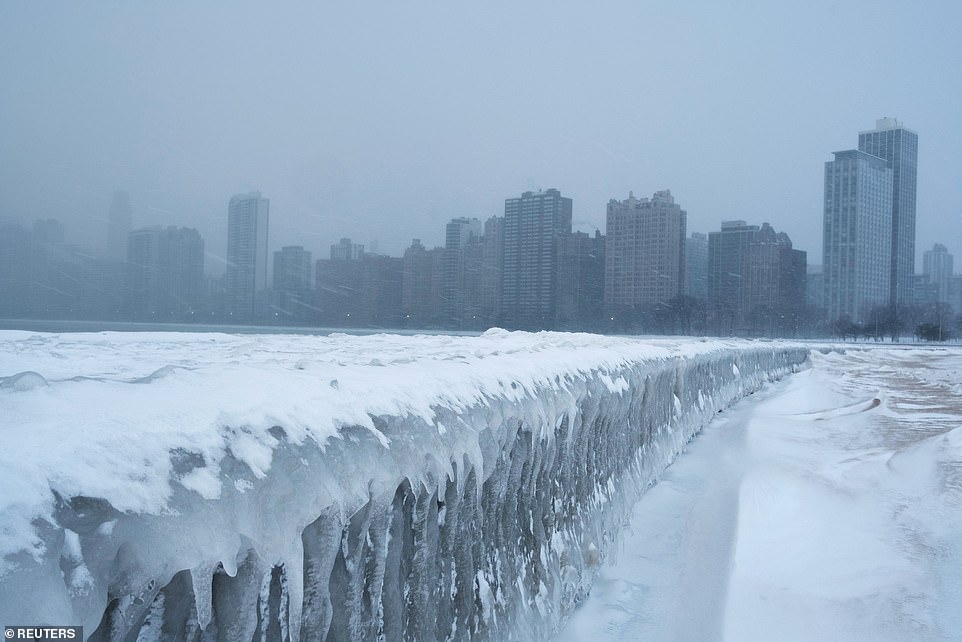
A frozen walkway along Lake Michigan in Chicago (source)

Wednesday, March 7, 2018

March 7, 2018 -- A Quick Run Around the Web

A derelict manor house in Estonia. Source: "Frozen in time: Explorers reveal abandoned fairy-tale mansions and a sunken Soviet prison in Estonia among other Nordic images"--Daily Mail.

  • I dub myself "the Docent" because my primary job--as I see it--is to direct your attention to, and point out, useful or interesting information. But there are other sites where the authors have gone to great pains to collect libraries of information for your use. Just a few examples:
  • Speaking of the foregoing, here is an article that I found via the Prepperology site, which is entitled "Gardening Tips for Beginners"--Grit.com. Notwithstanding the title, it probably is worth a glance by even an experienced gardener. It contains an overview of topics such as where to locate your garden (including orientation), soil preparation, garden structure (basically, how you are going to till or structure the soil), what to plant (or not plant), and some ideas on seeds. 
  • "How to Make Homemade Ketchup"--Modern Survival Online. If you don't think ketchup is a survival food, you must not have children. Actually, it is important to make food palatable, and a time-honored means is to use spices, herbs, and condiments to add to food. 
  • "Door Security Bar Review & What I Like Most About It"--Modern Survival Blog. The author reviews this product and likes it. If you haven't seen these before, they are a long aluminum tube with another tube in it, that can be adjusted for length. One end of the tube has a rubber padded foot that rests on the floor, and the other end has a yoke that is designed to fit up under a door knob. There is a handle that just slightly lengthens or shortens the devise so you can apply tension after you fit it into place. 
        I have used one of these devices before and would recommend them to people--especially those who cannot (for one reason or another) make security modifications to their doors. My wife and I first bought one way back in the day when we were in college and living in student housing. One day, my wife discovered that a workman had let himself into our apartment while she was showering. Nothing was taken, but nonetheless, it made us very uncomfortable. And we weren't the only ones--we had neighbors who had discovered that workmen had entered their apartments without permission or notice. This device allowed us to secure the door even if the intruder had keys to the locks. As we moved around to other apartments, we continued to use the same device. 
         There are a couple of points to keep in mind about this device. First, it relies on friction between the bottom foot and the door floor. It works great on carpet or rough tile. However, we have noted that other surfaces (wood flooring or linoleum) may be too slick for the bar to work. In one case, we put down a mat with a rubberized backing that seemed to grip the floor enough for the device to work, but on another occasion, even putting a mat between the floor and the foot was not enough--it still would slide out when pushing against the door from the outside. 
          Second, it also applies pressure to the underside of the neck between the door knob and the door. We noticed that, over time, because it is pushing up on the door knob, it can cause the screws to loosen slightly on the door knob or push the door knob mechanism slightly askew. So check your door knob to see if it is getting wobbly--you may need to tighten some screws.
          I would also note that there is a related product for securing sliding glass doors. However, instead of a yoke on one end, there is a second foot. You place the rod between the frame on one side and the edge of the sliding door on the other, and lock it into place. We also used one of those until we moved into a house without sliding doors (we gave it to our neighbor).
  • "Keeping Your Family Alive and (Reasonably) Happy During a SHTF Winter"--Survival Cache. While this has pointers on what to do if your power goes our or your furnace stops working, it has has advice for just surviving being cooped up during the winter months. As the author notes, "Under normal everyday circumstances, winter sucks for most people once the thrill of Christmas and the winter holidays has passed. Even with the modern conveniences of running furnaces, humming pellet stoves, and hot water generally any time one wants, winter still isn’t much fun if you’re not a winter sports (skiing/snowboarding, snowshoeing, snowmobiling, ice fishing, etc) person. If you have blood circulation issues (such as Reynaud’s Disease) or other health problems, weather can be downright dreadful and flat-out miserable, if not deadly."
         The author discusses how to stay warm in a SHTF situation during winter--both methods of keeping your home warm and your person warm; and he discusses the importance of good hygiene, keeping yourself dry, and keeping you and your kin sane (i.e., safe from cabin fever).
  • Interesting, if true: "Plague ‘hiding in plain sight’, warn scientists "--The Telegraph. The general theory is that plague bacteria circulate and percolate within certain rodent populations. However, the researchers of which this article is about claim that it actually subsists and lies dormant within the soil. In the case of the particular tests the researchers tried out, the plague bacterium were consumed by amoeba in the soil, and survived within those amoeba.
  • AT&T is pushing for an Internet bill of rights. The statement indicates that "AT&T is committed to an open internet. We don’t block websites. We don’t censor online content. And we don’t throttle, discriminate, or degrade network performance based on content. Period." And it urges Congress to require the same of other providers. 
  • "Think the Bosnia Conflict Was a Civil War? Think again"--War Is Boring. From the article:
             A more nuanced consideration might conclude that the conflict, although an international one, was more of a proxy war fought in Bosnia between Yugoslavia, Croatia, several Muslim countries and NATO, all of whom competed to further their interests in a fragile, emerging state. All the actors listed became directly involved in the conflict, contributing troops and material to the war to achieve their respective goals, without directly coming into conflict with each other.
              Perhaps the most convincing analysis, however, comes from Mary Kaldor of the London School of Economics, who suggested that the war in Bosnia should be considered as a “new war.” Although localised, such conflicts involve ‘a myriad of transnational connections’ which blur the distinction between internal and external, aggression and repression, local and global and state and non-state.
                 Viewed through this lens, the war in Bosnia can be seen to have been one of the first of a new type of conflict in the globalized post-Cold War era, in which both state and non-state parties to a conflict operate globally, and borders signify little more than a potential casus belli that can be utilized when advantageous.
        The article goes on to note the foreign support of Bosnian Muslims:
                 The predominantly Muslim Bosnian government did not have a neighbor to sponsor its war effort or march to its aid, but it did receive assistance from an unlikely grouping of predominantly Muslim states – Pakistan, Iran and Saudi Arabia, with the tacit collusion of the United States. Iran and Saudi Arabia smuggled weapons into the country unhindered throughout the war, and Pakistan’s notorious ISI is said to have provided intelligence and logistical support to the Bosnian government forces.

                 A report by the Dutch into the genocide at Srebrenica made no reservations about noting “black flights” of C-130s dropping off weapons and supplies in Tuzla Air Base, and it later emerged that the Pentagon orchestrated arms shipments for the Bosnian Muslims utilizing their contacts among the Afghan mujahidin.

                Indeed, a few thousand Islamic fighters are known to have made their way to Bosnia from across the Muslim world to form “El Mujahid” detachments that were deployed as shock troops. Further external support was offered in August 1995, when NATO began Operation Deliberate Force, a bombing campaign which would see more than 1,000 bombs dropped exclusively on Bosnian Serb targets in support of the offensive of the Croatian army into Bosnia.
                The article also notes that a U.S. military contractor, Military Professional Resources Incorporated, provided training to Croatian troops that later invaded Serbia. 
                Essentially, the RS-25 engine is an updated version of the engine that was originally used in order to propel a NASA space shuttle into space. The Space Launch System is actually designed for missions that extend beyond low-Earth orbit, and can theoretically transport crew and cargo to the Moon or beyond. With a weight capacity of more than 45 metric tons, the NASA Space Launch System can shift a huge amount of weight and transport a large payload to distant destinations. Each Space Launch System configuration is powered by four models of the RS-25 engine, and these new configurations should add a good amount of power to the existing setup.

                Wednesday, December 7, 2016

                Furnace Problems and Heating

                (Source)
                We had our gas furnace stop working a couple days ago, just as we were hit with a cold snap. Fortunately, we have a very efficient carousel fireplace that is easily capable of heating our house. However, the furnace failed in the middle of the night, and it was inconvenient, if that word applies, to have to go out to collect wood from the woodpile and get a fire going at 2 a.m.

                The problem turned out to be a clogged nozzle on the draft inducer. (I had a suspicion that this was the problem because we had a similar issue a few years ago and had to call a technician). On our particular model of furnace, there is a vacuum hose that runs from the draft inducer to a pressure switch that regulates when the furnace will light.  Because of the clog, the switch would not activate. I was able to diagnose the problem by pulling off the hose and, after checking that there was no obstruction in the hose, sucking on it to see if I could get the switch to activate (which it did). Fortunately, after diagnosing the problem, it was easily remedied using a wire to push out the blockage and reattach the vacuum hose. (Additional information about pressure switches on gas furnaces can be found here).

                However, in starting and maintaining the fire in the fireplace, I was once again impressed with the need to have different types of wood. I'm not just talking about kindling, small pieces, and larger pieces, but woods with different burning characteristics.

                I've mentioned before that a lot of the pine wood we've used in this area, unless it impregnated with a lot of pitch, generally does not release a great deal of energy when burned. These pieces, at least when larger, are good for burning for a long period of time. However, to get them to combust completely generally requires mixing some hotter burning wood in the fire. We use fruit tree wood, poplar, and/or ceder that we salvaged from a fence. 

                We also use the hotter burning wood to get an initial hot fire going. I've learned that it is far better to get a larger, hot fire going that quickly warms the house up, and then use smaller quantities of wood to maintain the temperature, than to be parsimonious with the wood initially and never reach the desired temperature.

                Tuesday, December 8, 2015

                Burning Mixed Wood

                (Source)

                I've noted before that my family burns wood for heating. Although the amount and how often we burn varies from year-to-year, in most years we use it most every day to reduce heating costs and wear and tear on our furnace, especially when temperatures dip below freezing.

                One thing I've noticed over the years is the advantage gained from burning different types of woods at different stages of the fire. Of course, most woods give off different amounts of heat for a given volume (see here for a chart comparing different wood types). My experience does not exactly match what is on the chart, but it obviously is going to depend on the quality of the wood. Also, there may be a great deal of variance within a certain category or type of wood.

                Around here, the primary types of wood available are high density pine (generally Ponderosa pine), various fruit wood because of large orchards in the area, poplar or cottonwood (which seems to grow like weeds in this area), and low density or inferior quality pine (generally Lodge Pole pine). Occasionally other hard woods from shade trees (oak, elm, maple, etc.) are available. We have a maple on our property from which we use fallen or dead branches. As I had noted last year, my father-in-law had taken down a ceder fence surrounding his property, and so we ended up with a large quantity of well-seasoned ceder planks that we have been using.

                My experience is that relying on a single type of wood is never ideal. Although there are sometimes exceptions, pine wood typically burns at a lower temperature than other woods and, for that reason, is not consumed as fast as other woods. There are exceptions, particularly if the pine is high in resin, but with the types of pine in my area this seems to hold true. This makes it good for starting a fire, but terrible for trying to heat a large space. However, it is good for maintaining the fire once the space has been heated to a comfortable temperature.

                Poplar, when dried, is a very low density wood that lights easily, burns fairly hot, but also burns quickly.

                Ceder is another low density wood that lights easily, burns hot, but burns quickly.

                Fruit woods can be difficult to get started, but once started, produce a lot of heat and will burn for a decent amount of time.

                Hard woods such as oak or elm are difficult to start, but can produce a lot of heat and generally burn even longer than the fruit woods for a similar sized piece.

                As you can probably already guess, I like to use an easily started, hot burning wood such as poplar or ceder to start a fire, then add (or have arranged around it) longer burning wood. My preference for the initial heating of the house is to use the hot burning wood with some staying power such as fruit wood or other hard woods. If those are not available, I will fall back on burning larger quantities of ceder or poplar. Once the desired room temperature is reached, I will either cut back on the amount of wood I'm burning, or switch over to using the pine. If the pine begins to burn low without being consumed (because the heat output has reduced), I will add a piece or two of hot burning wood (ceder, poplar, or fruit tree wood) to give it a boost.

                If you want coals for cooking (or roasting marshmallows), I will either rely entirely on the hot burning woods, or keep adding the odd piece of hot burning wood to the pine until it burns down into coals.

                Related Post: Building a Fire.

                Friday, March 13, 2015

                Replacing the Wick on a Kerosene Heater

                I had mentioned last month about using kerosene heaters as a backup or supplemental source of heat for an apartment or house. Kerosene heaters are pretty fool-proof, but that doesn't mean that they don't require any maintenance. If nothing else, depending on the use, you will need to periodically replace the wicks. Fortunately, Advanced Survival Guide has a good article, with photographs, explaining how to do this.

                Tuesday, February 17, 2015

                EPA's Ban on Woodstoves

                The EPA has proposed new rules that will require wood stoves, fireplaces, fireplace inserts, and certain other wood heaters to burn "cleaner." (Here is a list of the "appliances" the EPA says are covered by the rules). Many are claiming that the new rules will prohibit the sale of 80% of the wood stoves currently on the market. Whether the new rules are needed or even desirable is hotly debated. Certainly, since the purpose of the rules is to maintain air quality in metropolitan areas, it seems unnecessary to apply the rules to rural counties.

                Nevertheless, the important point to remember is that the rules' application is prospective only--it does not ban stoves, fireplaces or inserts currently used in your home, but those sold after the regulations take affect. For someone who currently owns a wood stove, fireplace, or fireplace insert, the issue will rear its head if and when you replace or upgrade the stove, fireplace or insert. This is a good reason to take the time and money to properly maintain your wood stove, fireplace, or insert, so--hopefully--you won't need to replace it.

                Since this is not an issue I've looked into, I assume that the EPA compliant stoves and fireplaces will cost more, and probably require electricity to run blowers or pumps in order to achieve the required efficiency. As a prepper, a consideration may be whether the stove or fireplace can usefully function even if the electricity were to fail. Anyone that knows more about this subject is encouraged to post a comment.

                Friday, February 6, 2015

                Kerosene Heaters

                About a year ago, we had our furnace stop working one cold winter night. By the time I woke up, the interior temperature had already dropped into the 40s. I was up in the middle of the night to kindle a fire in our fireplace, and set up a box fan to help circulate the heat around the house. However, the fireplace requires monitoring, which meant that I was up repeatedly through the night to add more wood to the fire. So the next morning I set up a large kerosene heater to heat the house until we could get a repairman to come out.

                A modern kerosene heater requires ventilation, but is otherwise quite efficient and satisfactory for emergency heating purposes--even over a long period of time. Although there are fumes when starting and turning off the heater, there is otherwise little smell from the kerosene; and the heaters come with protective cages around them, and emergency shutoffs if knocked over. Moreover, the protective cage is designed to hold a tea kettle to heat water for drinks or provide some extra humidity.

                When I lived in Japan, I used kerosene heaters for heating in the cooler months--as did nearly everyone else in Japan. In the winter, firemen and volunteers would walk around neighborhoods in the late evening banging sticks together to wake up people that might have fallen asleep with their heaters running. Most apartments and houses had ventilation holes built into the walls for when running a kerosene heater. In the apartments I stayed in, we used the smaller box type heaters that could be pushed near a wall or into a corner, and used a reflector to direct the heat into the room. Larger homes and commercial businesses would use the upright heaters that were intended to sit in the center of the room, like the one below.

                Kerosene Heater, 23,000 btu
                (Source)
                After I got married, while still living in cheap apartments, my wife and I purchased one of the larger heaters not only for emergency purposes, but also to supplement the meager (and expensive) heating from our baseboard electric heating units. Since moving into homes with central heating using a natural gas furnace, the heater has mostly been relegated to the garage or storage. However, we keep the fuel on hand just in case...and I was darn glad we had it when our furnace conked out.

                The Advanced Survival Guide has a detailed article on the different types of kerosene, and storing and using kerosene. For those interested in this great backup heat source, check out the article.

                Tuesday, December 30, 2014

                A Couple Articles on Growing, Cutting, and Preparing Firewood

                I know it is too late to do anything for this year's firewood needs, but spring is only a few months away. Via the Surviving Anarchy site, I found two articles from the Oklahoma State University extension office regarding firewood:

                (1)  "Managing Your Woodlot for Firewood"(PDF)--a basic guide for managing a wood lot to grow better quality timber for sale or use, and culling other trees for firewood.

                (2)  "Firewood: How to Obtain, Measure, Season, and Burn" (PDF). It has good information on stacking wood, and the BTU output of various types of wood.

                Sunday, November 3, 2013

                Friday, December 21, 2012

                Selecting a Wood Cookstove

                Canadian Preppers Network has a nice article on selecting a wood cook/heating stove for your home. The primary problem is price--the traditional wood kitchen stove from Heartland was about $7,000 (presumably,  in Canadian dollars). The article discusses a couple other stoves, and then the author settled on the Pacific Energy "Alderlea" stove. This one has a large firebox (great for heating) but no oven. It does have a swing out cooking top. The stove was $2,500 (with another $3,000 for installation).

                Tuesday, January 31, 2012

                Oven Stoves

                From Low-Tech Magazine, a lengthy article on "oven-stoves"--ceramic or stone stoves--designed to provide heat throughout the day (or night) on less fuel than a conventional wood stove or fireplace. The article also has numerous photographs of different designs and styles.
                The most essential feature of an oven stove is that it is made out of some kind of stone or brick, while all our modern heating appliances are made of steel. Metal heats up fast, but it also cools down just as quickly. Therefore, a metal heating appliance has to be fuelled almost continuously.

                Stone requires more time to heat up, but once it has, it holds the heat much longer. An oven stove is only fired for a short time, from a quarter of an hour to one or two hours and only once or twice per day. An average oven stove then radiates heat for at least 12 hours.

                Smoke channels

                The main part of the heating appliance consists of a labyrinth of smoke channels and smoke rooms. Their aim is to hold the warm gasses inside the oven as long as possible, so that the stone can absorb the heat before it leaves the chimney.

                The energetic output of an oven stove is 80 to 90 percent, compared to 40 to 50 percent for metal stoves or central heating appliances, and only 10 to 15 percent for a fireplace – where most heat escapes via the chimney. One of the most striking features of a (wood fuelled) oven stove is the stokehold, which looks ridiculously small compared to the stove itself.

                Thanks to the high output, a modest masonry heater or tile stove (heating a room of 60 square meters) only needs 6 cubic meters of wood per year: one tree. If you have even a small garden, you can easily fuel your oven stove by means of your own cuttings – thin wood is very well suited for tile stoves, although it needs to be dry enough.

                Radiant heat

                All our contemporary heating appliances warm a house or a room mainly by means of convection: they heat up the air. An oven stove does it by means of radiant heat: infrared radiation, comparable to the heat of the sun. In a room that is heated by an oven stove, a thermometer can hardly measure anything.

                The effect is comparable to that of a skier who enjoys a schnapps while sunbathing, in spite of the freezing temperatures. Radiant heat does not (only) warm up the air, but particularly also the body of the skier directly.

                An oven stove acts in the same way as the sun: it does not so much heat the air, but the floor, the walls, the furniture and the people in the room. These objects in their turn radiate that absorbed heat to their environment – similar to a city radiating heat after a long hot summer day, when the walls and the pavement slowly release back the heat from the sun.
                Read the whole thing.

                Friday, December 2, 2011

                Building a Fire

                Now that the weather has cooled, and the smell of woodsmoke hangs in the air from fireplaces and woodstoves (lots of people in my neighborhood heat using wood), its probably a good time to review some of the fundamentals of building fires. And, I don't mean a survival fire with flint and steel, or rubbing two sticks together. I'm talking about one in a fireplace, woodstove, fire pit, or so on, using matches and paper and dry wood from the wood pile.

                I'll admit that starting a fire is an art, but there is actually a fair amount of science involved. The basic issue is raising the temperature of wood past the point of combustion so that it freely burns. Obviously, it is easier to raise the heat of a small mass of wood (i.e., kindling) than a large piece of wood. So, make sure to have some small, thin pieces of wood available for kindling. It also helps to keep a small quantity of wood inside so that the wood has a chance to heat up before you try to use it to start a fire. Otherwise, with cold wood, you simply have to add more heat before it will ignite (i.e., its harder to start).

                Also, make sure your wood is dry. Water boils at a temperature that is lower than needed to ignite wood, so if there is any substantial amount of water in the wood, the water will actually regulate the temperature of the wood until the water is gone (generally through vaporization). However, if you have ever wondered why a steam burn is worse than a water burn, even if both are at the same temperature, it is because it takes considerably greater energy to turn liquid water to steam than to heat the water to the boiling point. That is extra heat and energy you must put into the water in the wood before the wood will ignite. In short, damp wood is hard to ignite. Bringing the wood indoors before hand will help allow the damp wood to dry out.

                When I build a fire, I attempt to create a combustion chamber or fire box structure to contain and reflect the heat. Through experience, I have found that the best way is to take two larger pieces of wood and place them laying down in a narrow "V" shape, open only a slight amount (no more than one inch or so) on one end, and open about 3 or 4 inches on the other. How large of piece depends on the type of wood--you will need to use smaller pieces of hardwood than you will need with pine. If the wood has been split so it is triangular or squared off in a cross section, try to arrange it so it overhangs the center of the "V" rather than being open. Remember, you want to try and trap the heat in the center of the "V." Also, its easier to work with if the open end of the "V" is facing you.

                Into the gap in the center of the "V", I will place a twisted piece of paper towel, a torn piece of paper-fiber egg carton, or some other fire starting material such as a cotton ball soaked in petroleum jelly (Vaseline). Don't use newspaper. Newspaper does not disintegrate as it burns, and the sheets of "ash" will smother the fire.

                Over this I will put my kindling. Not too much, and make sure there is both space between the kindling and the firestarting material, and between the pieces of kindling, in order to allow air to flow to the fire. The best kindling are thin strips of pine, no more than 1/4 inch thick, and perhaps several inches long. You can shave these off larger pieces of pine using a hatchet. If using sticks or twigs, use a mixture of small pieces and two or three larger pieces no larger in diameter than your finger or thumb.

                Once this is in place, use a match or lighter to light the firestarting material. Your goal at this point is simply to get the kindling to ignite.

                If the kindling catches and is starting to burn strong, add one or two small pieces of wood (1/2 to 3/4 inch works well) over the original kindling (again, keeping as much as possible a small amount of space so the fire is not smothered). Your goal now is to have enough wood that it will form hot coals between the wood forming the "V". Place one or two larger pieces of wood at an angle across the "V" to form a roof that will further trap the heat in place, but still leaving gaps to allow air circulation. Essentially, it should look like an inverted "A" with one or more cross pieces. At this point, the fire will have started to ignite the faces of the wood facing the combustion chamber (both the sides and the roof), and will gather in strength.

                If you are having trouble with the kindling staying lit, you need to increase the temperature of the combustion chamber. In these instances, I will add small pieces of corrugated cardboard (which works great) or paper board (which doesn't work quite as well). A few small pieces held over the flame until they ignite and dropped in a couple strategic locations will generally get things heated up.

                Once the larger pieces of wood have started to burn, then its time to prop one to three larger pieces of wood around it, one end up in the air and overhanging the wood below it, to build up a bigger fire. My experience is that it is more efficient to build a large fire initially, to quickly bring your room or house up to the temperature you want, and then add one or two pieces to maintain the temperature, than to slowly heat things up with a small fire.

                A ceiling fan on low, or even a small oscillating fan set on low will make your heating much more efficient by circulating the warm air.

                Ukraine Shot Down Russian Drone With Laser

                From CBS News: " Ukraine says it has intercepted a Russian jet-powered drone with a laser for the first time ." From the lede:    ...