Saturday, April 6, 2019

April 6, 2019 -- A Quick Run Around the Web

"A more likely SHTF scenario"--Set Apart Homestead (18 min.)
The author of this video argues that Venezuela offers a more realistic SHTF scenario, where the government is still (largely) intact and in control, but the average person is facing food shortages and the breakdown of utility services and economic collapse. 

  • Just a reminder that time is getting short to order from Baugo Blades. I just received my order of the Forager Camp Knife and hope to have a short review up in the next couple of days.
  • Don't forget to check out Active Response Training's Weekend Knowledge Dump for this week. Lot's of good articles on shooting, self-defense and survival, a warning about some scams, a cautionary tale of women traveling alone over seas who made the mistake of assuming that other countries are as safe for women as the United States, and much more. Some comments that warrant special attention are Ellifritz's comments about a recent Shooting Illustrated article entitled "Stealth & The Home-Defense Shotgun." The author of the article essentially makes the point that if you are moving to confront a burglar, you need to be stealthy about it. Ellifritz counsels otherwise:
          This article contains what may be some of the worst self protection advice I have ever seen in print.  If you think it’s the best tactic to remain silent during a burglary in progress, you are absolutely wrong.  You are not a ninja.  Your goal is to protect your family not to silently assassinate a burglar.
            As soon as you are aware that someone is in your house, you should loudly vocalize that you have called the police and are armed.  You want the burglar to leave.  You don’t want to shoot someone who doesn’t need to be shot.  You don’t want to accidentally shoot someone who turns out to be a friend or family member making an unexpected visit.  Finally, you don’t need the legal hassle or the clean up costs after you silently stalk a burglar and dispatch him with a contact distance shot with your 12 gauge.
             Come on folks.  We need to do better than this.
                Criminals don't think the way we do.  To think that they do is a fatal mistake.  
                  Never beg for mercy.  They won't show any, and doing so excites and emboldens them.  
                    Never bargain.  Because they won't keep their end of the bargain.  
                      Never cooperate with a criminal.  It will only get worse for you.  The secondary crime scene is always better for him and worse for you because it is more secluded.
                       The only thing they understand and fear is force.  The sooner you initiate (without telegraphing your intentions) an explosive counter attack, the better your odds of survival.
                          If you take pity on the criminal because of his background, you are wrong.  And he will take advantage of your stupidity.
                      Also:
                               John Holschen says bullets will splatter at 12 to 20 degrees from the hard surface that they hit, no matter what the incident angle is.  So, stay away from walls!
                               Stay back away from anything you are using as cover.
                                 If the target is identified as an enemy, shoot the first part of the target that comes into view.  Don't wait to get the center of mass shot in the A-zone.  If you can see the enemy's A-zone, he can see you.  If you shoot his elbow or foot, when it's all you can see, he probably can't see you at all.  Of course, you have to lean way over to get your eye out in front of any other part of your body.  [Of course, we are assuming that you have previously positively identified the target.]
                              (Brackets on original).
                              • A reader, whom I trust on the subject of concealed carry and self-defense, wrote to me in response to my roundup of articles on back pain and concealed carry, and highly recommended a good pair of suspenders. Of course, for civilian carriers, its important to keep a low profile. In this regard, he specifically recommended the Perry brand suspenders (sold by Duluth Trading Company). He notes that these suspenders snap on to a belt, with something similar to C-hooks on a holster rig, and so can be also be easily removed (such as when having to answer nature's call). He indicates that he can wear these under a shirt (but over an undershirt), and it supports a good amount of EDC gear without having to tightly cinch a belt. Another brand he mentioned was Hickman Saddlery suspenders with the “scissors lock” clamp. 
                              • "Purse Carry"--Active Response Training. Greg Ellifritz begins by assuring us, to our great relief, that he has never carried a firearm in a purse. But he has studied some of the things that can go wrong, and writes that negative outcomes from purse carry almost always involve one or more the following three things: (1) "Carrying a gun that isn’t drop safe or carrying the gun loose in the purse without anything protecting the trigger"; (2) "Carrying other items in the same purse compartment with the gun"; and (3) "Leaving purse unattended and within reach of a young child." Of course, his advice applies to most any off-body carry, whether it is a purse, a day-pack, or a portfolio, etc. 
                                     A drop safe gun is simply a matter of design and maintenance. Most modern handgun designs incorporate some drop safety system, but not all. And not all are passive systems. For instance, the Colt 1911 style handguns use a safety notch, or "half-cock", that requires the user to set the hammer in the proper position. Other systems that might be used are firing pin safeties that keep the firing pin from moving unless the trigger is pulled (e.g., the Glock), a hammer block that blocks the hammer from falling completely unless the trigger is pulled, or a transfer bar system where the energy from the falling hammer is transfered to the firing pin via a bar that does not move into position until the trigger is pulled (e.g., Ruger revolvers). Different versions of the same basic handgun may have different types of safeties; for instance, one of the differences between the Colt Series 70 "1911" handguns and the Series 80 is that the latter has a firing pin safety.  (For more on safeties, check out this article at USA Carry). 
                                     Preventing the trigger from being depressed is generally a matter of two things: (i) not storing other crap in the same compartment as the handgun, and (ii) using a holster of thick enough material that something can deform the material enough to catch and pull the trigger (a problem with some cheap pocket holsters or the dividers between purse compartments). Ellifritz recommends the DeSantis Nemesis and Superfly pocket holsters for this purpose. 
                                    Leaving the purse unattended is a matter of paying attention to what you are doing. The greatest dangers are complacency and laziness. I think that people that carry off-body sometimes forget that they are carrying a pistol at all because they put the firearm in the purse or bag and never remove it except for the occasional cleaning or trip to the range. My recommendation is to always remove the firearm from the purse or bag when you get home so that you consciously have to decide to carry a weapon the next time you take the purse or bag. And, of course, as Ellifritz reminds us: "If you carry your defensive firearm in your purse, you must retain positive control of that purse in every situation."
                                        A regular clip that clips directly off the holster and onto the belt won’t allow any space to slip your shirt in between to get the desired tucked in shirt and still conceal your weapon.
                                          You will want to acquire an IWB holster that has an upside down “J” type of clip so that the clip will clip on and you can tuck the shirt in between the clip and the holster. A second element is to consider one with two belt clips as this will enable you to avoid the constant bunching up of your clothing that can happen with just a single belt clip holster.
                                  • One of the article cited by Jon Low in his monthly roundup is "The Appearance of Target Size" from NRA Shooting Sports. The author,  Norman H. Wong, O.D., notes:
                                  The image size appearance of our targets can vary from one individual to another. This is directly related to our vision as determined by our eyeglass prescriptions. ... Mild eyeglass prescriptions generally do not affect our perception of image size. However, with moderate to high prescriptions, there is a marked effect as to how big or small we perceive objects in everyday life.
                                  Dr. Wong explains the why of this phenomena and how it can affect depth perception. Basically, however:
                                  For those who are myopic (nearsighted), images would appear smaller than normal. Images for hyperopic (farsighted) individuals would appear larger. Since contact lenses correct vision at the same plane as the cornea of the eye, there would be minimal to no change in image size as compared to those who are lucky enough to have perfect vision. 
                                  If you wear corrective lenses, you should read this article.
                                  • Interesting: Four Thieves Vinegar claims that they developed an epinephrine autoinjector which can be built entirely using off-the-shelf parts, for just over $30 US.
                                  • Is there some rash of deaths and injuries by CCL holders that I've missed? "Not Everyone Should Conceal Carry – Train, or Don’t Carry"--Locked Back. The author warns that "[c]arrying a firearm without sufficient training could result in your death or the death of an innocent bystander." While I'm not trying to downplay the importance of training, I dislike the hyperbole of an article like this. The most important safety on a firearm is the one between your ears. As we are reminded regularly when police officers shoot themselves, shoot each other, drop or lose firearms, have firearms stolen out of their vehicles (both private and department), and so on, professional training does endow someone with the common sense to safely carry or use a firearm. On the other hand, it doesn't take training to understand the basic rules of firearm safety, and people with little or no training regularly protect themselves using firearms. 
                                         Training is a cycle: introducing and instructing on skills, feedback/constructive criticism as you work on or practice the skill, and testing. While you can receive instruction on skills from books and videos, feedback and testing is more difficult or impossible. This is especially true when learning skills that require tactile feedback, such as unarmed combat techniques. This practically requires at least another person with whom you can work. Training with a professional trainer also provides access to resources, such as equipment or training locations (e.g., a dojo or shoot house) to which you would not normally have access. 
                                         Even with professional training, practice is problematic. The military can afford to mix training with practice, but for most people, their practice must largely be independent of the person(s) providing them with the training. Consequently, you may need to take multiple classes to get adequate testing and feedback. 


                                  "Earth Catastrophe Cycle | Secret of the Sun"--Suspicious Observers (9-1/2 min.)
                                  This is the last of the Earth Catastrophe Cycle series of videos, although the author tells us that he is working on a compilation video of all the parts and add some additional material cut from the shorter videos. 

                                  I am not asking for sympathy.  I’m not asking for anything, really, except that you learn from my mistakes and ensure that you don’t make them.  But I do covet your prayers for my examination preparation, and if you think about it, that God would bless my efforts at finding meaningful and fruitful labor.
                                           Violence has erupted in northwestern Libya as the rebel army commander Khalifa Hifter ordered his troops to march on Tripoli.
                                              The U.N. Secretary General Antonio Gutteres was left dismayed on Friday night as Hifter rejected his calls for peace and surrounded the capital of the oil-rich north African state.
                                               On Saturday morning exchanges of fire were reported on roads south of the coastal city as the self-styled Libyan National Army pushed north into the suburbs. 
                                                 Hifter's army - based in the east - had pushed westward to circle the territory controlled by U.N.-backed Presidential Council and Government of National Accord (GNA) and supporting militias.
                                                  A well-informed U.N. diplomat said late Friday that Hifter's forces were reported to be on the outskirts of Tripoli, around 20 miles out, with gunfire close to Tripoli International Airport.
                                                    On Saturday the rebel army were said to have made their way into the suburbs just 10 miles from city centre, according to Sky News Arabia.
                                                      Local media reported that pro-GNA militias in the Ain Zara suburb were laying down arms and surrendering to the LNA. 
                                                The plot included the installation of tiny “keylogging” devices that picked up every keystroke. Between July and October 2018, former IT aide Jackson Cosko worked with an unnamed accomplice, a then-current Hassan employee, who repeatedly lent him a key that he used to enter the office at night and who allegedly tried to destroy evidence for him.
                                                And:
                                                     The theft occurred after Cosko was fired from Hassan’s office in May 2018 for undisclosed reasons, then hired by Democratic Texas Rep. Sheila Jackson Lee, giving him access to the House computer network.
                                                      “The defendant gained access to Senator Hassan’s Office by unlawfully obtaining keys from a staffer who was (at the time) still employed in the Office” and using it to repeatedly burglarize the office. He placed small, unobtrusive devices on at least six Senate computers that captured every keystroke, including usernames and passwords which he would then use to access further documents.
                                                Keep in mind that this isn't just a random IT guy that was hired, but part of a network of connected families:
                                                         The suspect’s father, Greg Cosko, is the CEO of Hathaway Dinwiddie, a construction company that built a university building named after Feinstein’s husband. He serves on the board of San Francisco State University alongside Willie Brown, the California politician who said he helped make the career of Democratic California Sen. Kamala Harris, with an illicit affair.
                                                          As former chairman of the San Francisco Chamber of Commerce, Greg Cosko hobnobbed with then-House Minority Leader Nancy Pelosi, Feinstein and others. The elder Cosko’s adult son appears to have made inroads in Washington via an internship with Feinstein.
                                                             You know the story. Despite technologies, regulations, and policies to make humanity less of a strain on the earth, people just won’t stop reproducing. By 2050 there will be 9 billion carbon-burning, plastic-polluting, calorie-consuming people on the planet. By 2100, that number will balloon to 11 billion, pushing society into a Soylent Green scenario. Such dire population predictions aren’t the stuff of sci-fi; those numbers come from one of the most trusted world authorities, the United Nations.
                                                              But what if they’re wrong? Not like, off by a rounding error, but like totally, completely goofed?
                                                                That’s the conclusion Canadian journalist John Ibbitson and political scientist Darrell Bricker come to in their newest book, Empty Planet, due out February 5th. After painstakingly breaking down the numbers for themselves, the pair arrived at a drastically different prediction for the future of the human species. “In roughly three decades, the global population will begin to decline,” they write. “Once that decline begins, it will never end.”
                                                            Also, one of the authors of the book related that "[w]e polled 26 countries asking women how many kids they want, and no matter where you go the answer tends to be around two." 
                                                            • More: If you want a good overview of demographic trends leading to declining world population, check out the documentary "Demographic Winter." 
                                                                    Less than three weeks ago, the WHO said the outbreak of the hemorrhagic fever was largely contained and could be stopped by September, noting that weekly case numbers had halved from earlier in the year to about 25.
                                                                     But the number of cases hit a record 57 the following week, and then jumped to 72 last week, said WHO spokesman Christian Lindmeier. Previous spikes of around 50 cases per week were documented in late January and mid-November.
                                                                       More alarmingly, more than half of the Ebola deaths last week occurred outside of treatment centers, according to Congo health ministry data, meaning there is a much greater chance they transmitted the virus to those around them.
                                                                  • "Deadly germs, Lost cures: A Mysterious Infection, Spanning the Globe in a Climate of Secrecy"--New York Times (via MSM). According to the article, "[t]he germ, a fungus called Candida auris, preys on people with weakened immune systems, and it is quietly spreading across the globe." Also, "C. auris is so tenacious, in part, because it is impervious to major antifungal medications, making it a new example of one of the world’s most intractable health threats: the rise of drug-resistant infections." The real concern, however, is that information concerning outbreaks of these infections is not getting the attention it should because it is being suppressed. One example:
                                                                           In late 2015, Dr. Johanna Rhodes, an infectious disease expert at Imperial College London, got a panicked call from the Royal Brompton Hospital, a British medical center outside London. C. auris had taken root there months earlier, and the hospital couldn’t clear it.
                                                                            “‘We have no idea where it’s coming from. We’ve never heard of it. It’s just spread like wildfire,’” Dr. Rhodes said she was told. She agreed to help the hospital identify the fungus’s genetic profile and clean it from rooms.
                                                                              Under her direction, hospital workers used a special device to spray aerosolized hydrogen peroxide around a room used for a patient with C. auris, the theory being that the vapor would scour each nook and cranny. They left the device going for a week. Then they put a “settle plate” in the middle of the room with a gel at the bottom that would serve as a place for any surviving microbes to grow, Dr. Rhodes said.
                                                                               Only one organism grew back. C. auris.
                                                                                  It was spreading, but word of it was not. The hospital, a specialty lung and heart center that draws wealthy patients from the Middle East and around Europe, alerted the British government and told infected patients, but made no public announcement.
                                                                                   “There was no need to put out a news release during the outbreak,” said Oliver Wilkinson, a spokesman for the hospital.
                                                                                     This hushed panic is playing out in hospitals around the world. Individual institutions and national, state and local governments have been reluctant to publicize outbreaks of resistant infections, arguing there is no point in scaring patients — or prospective ones.
                                                                                       Dr. Silke Schelenz, Royal Brompton’s infectious disease specialist, found the lack of urgency from the government and hospital in the early stages of the outbreak “very, very frustrating.”
                                                                                         “They obviously didn’t want to lose reputation,” Dr. Schelenz said. “It hadn’t impacted our surgical outcomes.”
                                                                                            By the end of June 2016, a scientific paper reported “an ongoing outbreak of 50 C. auris cases” at Royal Brompton, and the hospital took an extraordinary step: It shut down its I.C.U. for 11 days, moving intensive care patients to another floor, again with no announcement.
                                                                                              Days later the hospital finally acknowledged to a newspaper that it had a problem. A headline in The Daily Telegraph warned, “Intensive Care Unit Closed After Deadly New Superbug Emerges in the U.K.” (Later research said there were eventually 72 total cases, though some patients were only carriers and were not infected by the fungus.)
                                                                                               Yet the issue remained little known internationally, while an even bigger outbreak had begun in Valencia, Spain, at the 992-bed Hospital Universitari i Politècnic La Fe. There, unbeknown to the public or unaffected patients, 372 people were colonized — meaning they had the germ on their body but were not sick with it — and 85 developed bloodstream infections. A paper in the journal Mycoses reported that 41 percent of the infected patients died within 30 days.
                                                                                          • "I.Q. – uh- What is it good for? Absolutely Everything. Say it again."--Wilder, Wealthy & Wise. The author explains: "Intelligence is the ability to process information quickly with sufficient working capacity to create useful connections with previous information.  Intelligence really is measurable by I.Q. tests, and, oddly, is predicted by reaction times – the smarter you are (in general) the quicker your reaction times.  It’s as if the brain pathways move faster for smarter people." Also, "[i]ntelligence in nations has been shown to be correlated strongly with lots of good things:  economic freedom, savings, self-employment, education, literacy, interpersonal trust, and long lives.  Low national I.Q. has been correlated with lots of things we don’t like:  corruption, murder, and big government."
                                                                                          • It's good to be the king: "‘Secret’ DMV office serving California lawmakers would be closed under GOP proposal"--Sacramento Bee. Key part: "There’s a secret DMV across from the state Capitol with streamlined service that’s only available to members of the Legislature and a select group of political insiders[.]"
                                                                                          • Diversity is our strength: "Report: Gang Stole BILLIONS from UK Taxpayers, Infiltrated Govt, Funded al-Qaeda and Labour"--Breitbart. From the article:
                                                                                                 A vast network of British Asian gang members linked to Abu Hamza and the 7/7 bombers infiltrated government agencies, defrauded taxpayers of billions of pounds, and funnelled tens of millions to Osama bin Laden and al-Qaeda over 20 years, an investigation claims to have found.
                                                                                                    The report suggests that, through a complex series of tactics, including exploitation of illegal immigration, benefits fraud, VAT fraud, and mortgage fraud, the gang managed to steal an astonishing £8 billion.
                                                                                                      These funds were allegedly used to provide lavish lifestyles for the gang’s members, including luxury cars and properties — but also helped bankroll Osama bin Laden’s notorious al-Qaeda network, claims a Sunday Times investigation.
                                                                                                  The article also indicates that thousands of pounds were "donated" by the gang to the then governing Labour Party.
                                                                                                  • What we are importing: "Tijuana Drug War Rages: 21 Murders in less than 48 Hours"--Breitbart. From the article: "A study released in March by the Citizen Council for Public Safety and Criminal Justice (El Consejo Ciudadano para la Seguridad Pública y la Justicia Penal) listed Tijuana as the deadliest city in the world per capita, based on its 2018 registered homicide count. The bloodshed is generally related to turf wars involving Cártel Tijuana Nueva Generación (CTNG), aligned with El Cártel de Jalisco Nueva Generación, against the Sinaloa Cartel."
                                                                                                  • Related: "Encino Residents Threatened by Cartel Members"--KVEO.com. One resident related that “We no longer can go out without a gun, you can't go for a walk. My neighbor and his daughter were chased by men with masks. She was riding her wheeler down 281, they saw her they jumped the fence and started chasing her." She also said that a border wall is needed.
                                                                                                  • "The movement of peoples"--Vox Popoli. Noting a report from Pew Research concluding that 20% of the world's migrants (i.e., 44.5 million) live in the United States, Vox Day points out that this number is only first generation migrants, and including second and third generation would probably push the number over 85 million. He adds: "That's why I said, on a recent Darkstream, that the level of violence that can be reasonably anticipated in a US-breakdown scenario is Cultural Revolution-magnitude, which would indicate fatalities in the 50M to 100M range."
                                                                                                  • A reminder that we live in the 21st Century: "Recovering Smartphone Typing from Microphone Sounds"--Schneier On Security. 
                                                                                                    We present the first acoustic side-channel attack that recovers what users type on the virtual keyboard of their touch-screen smartphone or tablet. When a user taps the screen with a finger, the tap generates a sound wave that propagates on the screen surface and in the air. We found the device's microphone(s) can recover this wave and "hear" the finger's touch, and the wave's distortions are characteristic of the tap's location on the screen. Hence, by recording audio through the built-in microphone(s), a malicious app can infer text as the user enters it on their device. 

                                                                                                    Thursday, April 4, 2019

                                                                                                    April 4, 2019 -- A Quick Run Around the Web

                                                                                                    "Diagonal Lines Pistol Kata - In Detail"--Gabe Suarez (11 min.). Suarez has been advocating the use of kata in firearms training for about a year now. 

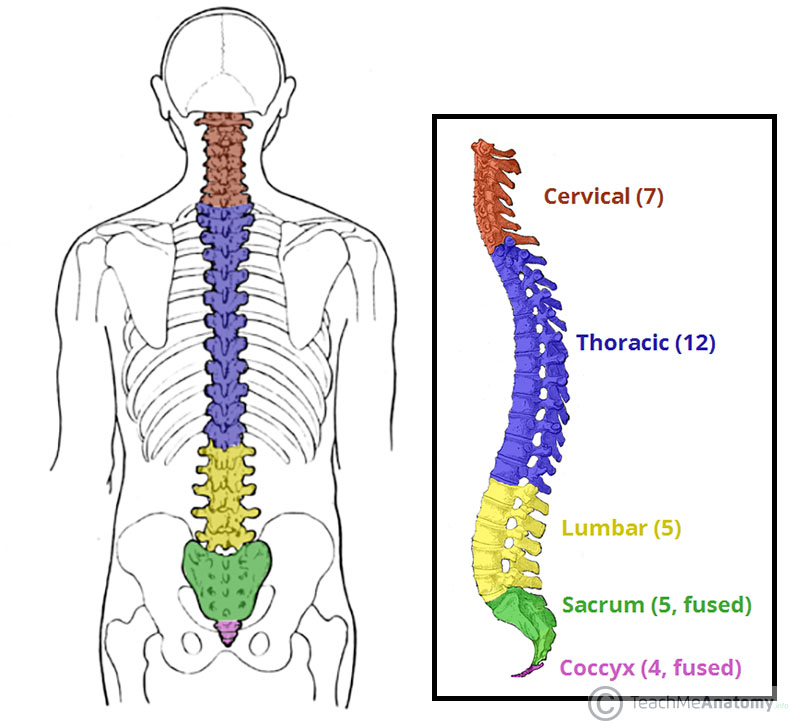
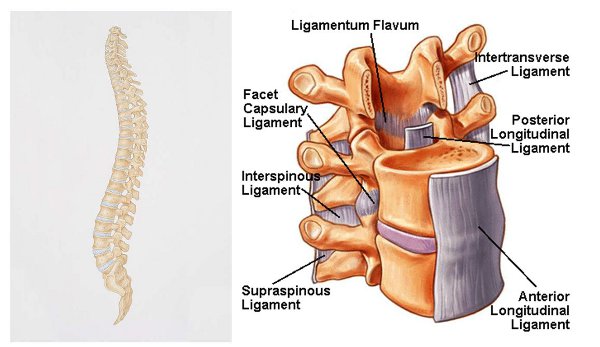
                                                                                                            I have been experimenting with different carry positions lately to try to alleviate or reduce back pain, and have found that shifting the holster to a 2 o'clock position helps. But what works for me may not work for you because there are many different causes of back pain. For instance, back pain can be caused by a sprain or strain of the ligaments or muscles that coat and support the spine. In others, the pain may be the result of injury or degenerative processes to the spine or the cartilage disks between the vertebrae that can impinge on the spinal cord or the nerve roots exiting the spine. As we age, the vertebrae can grow bone spurs and/or the disks may thin or even begin to disappear. On the other hand, trauma (and not even necessarily anything substantial) can cause a disk to tear or rupture, and the disk impinge the nerves. Some people also have unstable spines where a vertebrae can shift and become misaligned, again causing an impingement of a nerve or putting excessive stress on the muscles and ligaments. Here are some illustrations to help you understand the basic structures:
                                                                                                    Overview of the spinal column (source)


                                                                                                    Ligaments around the spine (source)


                                                                                                    Some of the nerve structures (source)
                                                                                                             The main thing to keep in mind is that wearing a firearm on the belt can pull on your lower spine, and cause muscle strain or aggravate a pre-existing condition or injury. If you already have a good belt that adequately supports the firearm but still allows the belt to conform to your body, and a good holster, then the issue is generally one of balancing the weight. There are two ways to approach this: (1) reduce the weight of the firearm so there is less strain and/or (2) attempt to balance or offset the weight in some way. I found some articles that discuss this issue in more detail below:
                                                                                                    • "How To Deal With Concealed Carry Back Pain"--Bigfoot Gunbelt's Blog. This covers topics such as getting a better gun belt (including a real good discussion of what makes a better gun belt), but also recommends getting a smaller pistol, reduce pressure with a different holster, and PT to strengthen the lower back and core and lose weight. 
                                                                                                    • "Concealed Carry Holsters and Pain"--How To Carry Concealed. This article is more about hip pain, and how it can be caused by the pressure of your holster into your side.
                                                                                                    • "THE DANGER OF 'SMALL OF THE BACK' CARRY"--1800GunsAndAmmo Blog. This article discusses some of the specific physiology that can go into a back injury, whether from falling on an object, or just carrying the weight. Recommended reading. As the author notes:
                                                                                                    A Spinal Subluxation is a misalignment of the vertebrae of the spine.  A subluxation can occur from a simple fall or carrying heavy backpacks, wearing poorly fashioned shoes, changing a tire, martial arts, any competitive sport or any simple movement whereby twisting or turning is involved or constant pressure is applied.  If the misalignment if not corrected, compression of nerve roots will occur.  The nervous system controls and coordinates all organs and structures of the human body.  Many nerves come from the spinal cord, pass through holes formed by notches in the vertebrae and supply specific areas and parts of the body.  If these nerves are pinched by subluxation, those areas or parts of the body effected by those nerves may malfunction and symptoms of illness may occur.
                                                                                                    She also notes:
                                                                                                    Constant pressure of a holster in the small of the back may eventually push the skeletal structure, compress nerves, and create discomfort.  Your discomfort may be passed off as a “breaking in period” like a new pair of shoes.  Perhaps the new holster on the concealed carry clothing needs to be softened to conform to your body.  You know it’s a little uncomfortable at first, but you decide to ignore it.  Over time some discernible physical evidence may appear and if you choose to ignore it, further difficulties may manifest.
                                                                                                    Read the whole thing.
                                                                                                              Besides an awkward draw compared to conventional carrying positions, the other practical consideration to carrying with a small of the back holster is that of the potential for injury. It isn’t so much that carrying a couple extra pounds on the back of the belt line is going to throw your back out or even present much of a challenge; far from it.
                                                                                                               Instead, the risk of injury is of you falling on it.
                                                                                                                 If you fall on your hip while wear ring a hip holster, it can give you a hip pointer bad enough to end some NFL careers, but you’ll probably get over it. Falling on the small of the back, though…can cause much more damage.
                                                                                                                  With small of the back carry, your gun sits more or less over your spine, and specifically over the lumbar spine and pelvis. Aside from hips and kneecaps, these are some of the most vital areas involved in ambulatory function. The lumbar spine is practically the foundation of the body; if it isn’t working well, everything else suffers.
                                                                                                            • "Ergonomics and police duty belts: easing their load"--American City & Country. This is a more detailed article on the issue of the weight of police belts and some methods to try and reduce pain or other issues that might arise. Although aimed at law enforcement, some of the ideas are applicable to the civilian. Including wearing suspenders to help with carrying and balancing the weight: "Suspenders are effective because they distribute the weight of the equipment over the shoulders and chest rather than just on the waist. That also means that the belt does not have to be worn as tight, cutting down on pressure exerted on the stomach and waist area." 
                                                                                                            • "Heavy gun belts are giving SFPD officers back problems"--Mission Local. Another law enforcement focused story, it gives some information that the San Francisco Police Department has found from studying work-related back problems. Probably the key point to take from this article is: "In his studies, Janowitz found that 'balance is more important than the actual weight.' The problem, he said, is that properly balancing a belt might not be compatible with placing an officer’s tools in places where they can be most easily accessed."
                                                                                                                     Human hips are contoured, women more than men. Yet, modern keeper and duty belts are made using layers of nylons and plastics and synthetic leathers and cannot conform to the natural contour of the hips. You can wear them for years and they will not mold to the hips.
                                                                                                                      The only belts that will mold to the body are stretch or leather keeper belts and FG leather or contour cut duty belts. FG leather stretches and bends with time and takes on a slight U shape. All other combination leather and synthetic belts use plastics in layers specifically to hold their shape and will to cut into your hips. Add 20+ lbs. of gear and you have a bruising problem.
                                                                                                                  Medical professionals agree that a major cause of back pain is weight gain, with many claiming as little as a 10% change in body weight can result in damage to the discs, muscles, ligaments and tendons of the lower back. Guess what that modern duty belt weighs? On average your daily equipment load weighs in excess of 20 pounds, meaning any officer weighing 200lbs or less is automatically at risk. If you take into account aspects of daily patrol duties such as long-term sitting in a patrol car or standing posts, which are in themselves injury-inducing behavior, the risk multiples.  Following my own brush with back problems, magnified following a fall, my physical therapist provided me with some valuable advice that allowed me to get back on my feet and back to work.


                                                                                                                  "China’s Secret Invasion of the US | General Robert Spalding | Trump China"--China Uncensored (24 min). An explanation of how China is pursuing a policy of war by other means. Although it is not mentioned, it is important to also recognize that China is trying to isolate the United States from allies (e.g., Germany and Canada) and exert control via "soft power" over the nations that border us (Canada and Mexico).

                                                                                                                            New York Times journalist Nicholas Casey was in Maracaibo, Venezuela, in March when the country was hit by a six-day blackout, considered at the time the worst in Venezuela's history. He says people initially assumed that the outage had been planned and that power would be restored after a few hours. But as hours stretched into days, the country fell into chaos.
                                                                                                                              "By the fourth day of the power outage, that was when you started to hear shots getting fired in the street," Casey says. "People were beginning to loot, and the store owners were coming out to defend their stores."
                                                                                                                                The Church of Jesus Christ of Latter-day Saints on Thursday repealed rules that banned baptisms for children of gay parents and that labeled same-sex couples as sinners eligible for expulsion — marking a reversal of policies condemned as jarring detours from a push by the faith to be more compassionate about LGBTQ issues.
                                                                                                                                 LGBTQ church members and groups that support them expressed relief about what they called an important step forward for the faith. However, they also said they were angry about the harm the 2015 policies had caused and the lack of an apology by church leaders.
                                                                                                                            Well, up until 5 years ago, there wasn't an issue about gay couples having children so there was no need for such a policy. Anyway, from the Church's news release:
                                                                                                                                      Children of parents who identify themselves as lesbian, gay, bisexual, or transgender may now be blessed as infants and baptized in The Church of Jesus Christ of Latter-day Saints without First Presidency approval, President Dallin H. Oaks announced Thursday morning, April 4.
                                                                                                                                        In addition, the Church will no longer characterize same-gender marriage by a Church member as “apostasy” for purposes of Church discipline, although it is still considered “a serious transgression.”
                                                                                                                                  • "The 737 MAX and the Death of MIL-STD-499A SYSTEM ENGINEERING MANAGEMENT"--Chicago Boyz. The author notes how the lack of basic software engineering reliability principles led to the 737 MAX crashes, and he connects this to the aircraft industries abandonment of MIL-STD-499A. The standard was abandoned by the Clinton Administration way back in 1995. The author explains that defense contractors' "support of Bill Clinton was retaliation by the big US defense contractors for Defense Secretary Cheney holding large defense contractors accountable for a major defense program’s failure to perform.  Killing that political precedent was a vital interest for American defense contractors in the 1992 presidential election." 
                                                                                                                                  • A reader sends: "WHY 5G MAKES ME RECONSIDER THE HEALTH EFFECTS OF CELL PHONES"--Wired. The author wonders "What if transmissions to and from 5G cells, which will need to be everywhere, and much closer to us than traditional cell towers, pulsing out very-high-frequency radio waves at high power levels, pose real risks to human health?" The author's primary concern is that there is evidence that even non-ionizing (non-heating) radiation can cause health problems, but 5G cell towers (because of their limited range) will need to be omnipresent in all neighborhoods.
                                                                                                                                          First some background. As one article explains, "5G networks are the next generation of mobile internet connectivity, offering faster speeds and more reliable connections on smartphones and other devices than ever before," and should "offer connections that are multitudes faster than current connections, with average download speeds of around 1GBps expected to soon be the norm." This is possible because 5G networks will make be able to make use of "higher frequencies (FR2), above 24 GHz and into the millimeter waves range," of 30 to 300 GHz. 
                                                                                                                                  The characteristics of MMWs [millimeter waves] are different than the “low-band” (i.e., microwave) frequencies which are currently in use by the cellular and wireless industries. MMWs can transmit large amounts of data over short distances. The transmissions can be directed into narrow beams that travel by line-of-sight and can move data at high rates (e.g., up to 10 billion bits per second) with short lags (or latencies) between transmissions. The signals are blocked by buildings, and foliage can absorb much of their energy. Also, the waves can be reflected by metallic surfaces. Although antennas can be as small as a few millimeters, “small cell” antenna arrays may consist of dozens or even hundreds of antenna elements.
                                                                                                                                  (See also, "Applications of Millimeter Waves and Future").
                                                                                                                                           There is a downside to the short range: there will need to be many more antennas. Current estimates are that antennas will need to be placed every 10-20 houses in urban areas with 50,000 new cell sites needed in California, and potentially 800,000 or more nationwide; other sources I've come across have stated even higher densities will be necessary. 
                                                                                                                                          But, as the Wired article indicates, many people worry about the health effects of Millimeter waves (MMWs) such as will be used for 5G. MMWs are currently used for the body-scanners at airports, and there is a great deal of concern with prolonged exposure to the these high frequencies (see, e.g., this article and this article from Scientific American). The latter article notes that "that microwaves such as those from the millimeter wave body scanners can interact with the entire body, individual organs or with large molecules, thus having a potentially measurable effect." In addition, exposure to MMWs can increase temperature of the skin and that of the surface of the cornea. In fact, "the Active Denial System (ADS) ... uses radio frequency millimeter waves in the 95GHz range to penetrate the top 1/64 of an inch layer of skin on the targeted individual, instantly producing an intolerable heating sensation that causes them to flee." 
                                                                                                                                         Presumably, the signals used in 5G networks will be less intense than those from an ADS. Nevertheless, as one article explains, there is a concern that even then, the "[t]emperature elevation can impact the growth, morphology and metabolism of cells, induce production of free radicals, and damage DNA." However, research is mixed, with some studies concluding that that there is nothing to fear. (See also this article reporting that there is no harm to the eyes). New York University (NYU) has been studying the issue, though, and concluded that "[o]ur recent research shows that current methods based on estimating power density are not suitable to determine exposure compliance when millimeter wave devices are used very close to the body."  
                                                                                                                                           [C]rashed Teslas being sold at junkyards and auctions are retaining what CNBC says is “deeply personal” and unencrypted data, including video from the car’s cameras that show what happened moments before the accident.
                                                                                                                                             The unencrypted videos – plus phonebooks, calendar items, location and navigational data – were extracted by a security researcher who calls himself GreenTheOnly. The researcher retrieved the content from Model S, Model X and Model 3 vehicles purchased for testing and research from salvage.
                                                                                                                                        I'm sure that other vehicles also retain data.

                                                                                                                                        Monday, April 1, 2019

                                                                                                                                        April 1, 2019 -- A Quick Run Around the Web

                                                                                                                                        "Sticky Holsters/Remora: Just Say NO"--Active Self Protection Extra (14 min.)
                                                                                                                                        In this video, John Correia rips on the pocket holsters from Sticky Holsters and Remora. He notes that the three basics for a decent holster is that it must cover the trigger, it must securely hold the firearm, and it must allow access to the firearm. I can't tell from the video if Correia is only meaning the specific holsters he mentions, or all pocket holsters. I've used the De Santis Nemesis holsters for several guns, and have liked them. They completely cover the trigger, and both the material and the design of the holster work fairly well at keeping the holster in your pocket when you draw. Of course, if all you consider is the holster by itself, pocket holsters don't meet the requirements that Correia mentions; after all, you could turn the holster upside down, and the firearm would simply fall out. But a pocket holster is not really the whole of the "holster": the pocket itself is part of the "holster". Some styles of cuts of the pocket on pair of slacks or jacket, or a shallow pocket, might not adequately secure the firearm. But even with physical activity, I have generally found that the De Santis holsters work (although the holster and gun can bounce around quite a bit in a loose pair of trousers if you are running). 

                                                                                                                                                   U.S. District Court Judge Roger T. Benitez said the rule violates the Second Amendment and infringes upon citizens’ rights to defend themselves.
                                                                                                                                                    “California’s law prohibiting acquisition and possession of magazines able to hold any more than 10 rounds places a severe restriction on the core right of self-defense of the home such that it amounts to a destruction of the right and is unconstitutional under any level of scrutiny,” he wrote in an 86-page decision.
                                                                                                                                                     “California’s ban is far-reaching, absolute, and permanent. The ban on acquisition and possession on magazines able to hold more than 10 rounds, together with the substantial criminal penalties threatening a law-abiding, responsible, citizen who desires such magazines to protect hearth and home, imposes a burden on the constitutional right that this Court judges as severe,” he wrote.
                                                                                                                                                       Benitez, a George W. Bush appointee who serves on the bench for the Southern District of California, also wrote that California’s ban unfairly impacts a wide swath of the state’s gun owners, as many choose to use magazines containing over 10 rounds for their defense.
                                                                                                                                                         “The magazine ban arbitrarily selects 10 rounds as the magazine capacity over which possession is unlawful. … The ban on magazines that hold more than 10 rounds amounts to a prohibition on an entire class of ‘arms’ that is overwhelmingly chosen by American citizens for the lawful purpose of self-defense,” he ruled.
                                                                                                                                                           In Boston from 2010 to 2015, there were 221 gun homicides.
                                                                                                                                                            Research suggests that one change could have lowered that number by 40 percent: smaller bullets.
                                                                                                                                                      Per the TTAG author, "The Times concludes, based on the JAMA study, that if all of Boston’s criminals used firearms chambered in .45 ACP, there’d be a 43% increase in homicides." The NYT also suggests that we would have been better off if people had stuck to the cheap--and small caliber--"Saturday Night Specials." 
                                                                                                                                                      • But, if you like big calibers: "The Rossi R92 In .44 Magnum"--Business and Bullets. The Rossi R92 is, as you may have guessed from its designation, based on the Winchester 1892 lever action rifle. Unfortunately, from the author's perspective, Winchester does not produce the 1892 in .44 Magnum; but Rossi does, and for significantly less money than the Winchester rifle. The author likes the rifle, but does note that he had to clean up the action a bit. He also explains in detail why he prefers the light lever action carbine to an AR or AK style rifle, a lot of which has to do with the lighter weight of the Rossi and the fact that he doesn't have to mess with spare magazines. I also have a Rossi in .44 Magnum, and have liked it. The action on my was smooth, so I didn't work on it. However, I did have issues with cases sticking when shooting my admittedly "hot" hand loads, which I solved by polishing the chamber. I also replaced the plastic magazine tube follower with a stainless steel one from Steve's Gunz. 
                                                                                                                                                      • "PREPARING FOR A WORST CASE SCENARIO: THE 10-WEEK PLAN" (Part 1) (Part 2) (Part 3) (Part 4)--American Partisan. 
                                                                                                                                                      • Part 1 is the author's introduction to survival prepping, laying out a very rough outline of the areas of preps that you need (first aid/medical training, food storage, survival, and tactics & weapons), and discussing possible worst case scenarios.
                                                                                                                                                      • Part 2 starts to discuss prepping, including both skills you need and equipment. But first, the author discusses his belief that you are short on time, so you need to get started. Then he discusses the need to get into a physical training regimen, before moving onto acquiring your first weapon, and the one that he deems most important is the rifle. His recommendation is a mil-surp bolt action like the K-98 Mauser, or an AR-15. 
                                                                                                                                                      • Part 3 begins by discussing food preps, including a reminder that you will need at least 14 days of food with 1700 to 2000 calories per day (more if you are going to be doing a lot of work or movement on foot) for travel/bugging out purposes, and at least 6 months of food in your pantry. He then moves on to discuss storing and purifying water, as well as some basic first-aid/trauma kits.
                                                                                                                                                      • Part 4 discusses transportation, maps, compasses versus GPS, and some other gear, before providing some concluding thoughts.
                                                                                                                                                      Since this is just 4 articles, it is a pretty quick and dirty look at what basic preps. I don't agree with the author on everything. For instance, he recommends against GPS because in a national emergency, he believes that the government will reduce the accuracy to 100 meters. However, GPS used to be that for civilians and was still useful for people that were hiking or traveling off-road. I have also stated before why I agree with FerFal that your first gun purchase should be a handgun. But even if I don't agree with everything does not mean that it is a bad read--there are always ideas and tips you can pick up.
                                                                                                                                                               This widely held belief is based on the idea that, due to the stress of one’s life being in danger during a gunfight, it is best to utilize techniques based on gross motor movements because you will not have the dexterity or mental focus to perform tasks that require fine motor movements with your fingers.
                                                                                                                                                               While there is some merit to this methodology, the issue I have with it is, it ignores the fact that training and repetition do help give one the ability to accomplish tasks under stress.
                                                                                                                                                                 This methodology of gross motor movements disregards how many shooting courses one may have attended, how much training one has, or how many repetitions of something one has done. When faced with danger, [it presumes that] one will automatically become a panic-stricken, window-licking idiot.
                                                                                                                                                                    If that were truly the case, how have any Soldiers or law enforcement officers, aside from luck, survived their first gunfight? Another problem with the gross motor skill principle is it seems to be applied on a selective basis with no consistency. It applies for certain tasks requiring fine motor movements, but for other tasks requiring just as much fine motor movement, it does not.
                                                                                                                                                                  He then questions why you have to rely on gross motor skills to release the slide by racking the slide because using fine motor skills to depress a slide release will get you killed, but no one has a problem with the fine motor skills used to pull the trigger or release the magazine. My understanding is that, historically, the fine versus gross motor skills primarily came up in shooting stances and reloads. Specifically, in the middle of the last century, the FBI and law enforcement generally had come up with a method of delivering fast, accurate shots from the hip, but it required multiple steps and near perfect alignment of the legs, hips, shoulders and arm--i.e., it was essentially impossible to perform under stress except for the expert. Thus, other stances 
                                                                                                                                                                        The author next discusses the power-stroke and slingshot methods of working the slide, before moving on the scanning left, right and rear. On the latter point, he remarks:
                                                                                                                                                                            I particularly loathe this next technique: After engaging a threat, one should then scan all around, looking left, right, and rear to ensure no more threats are present. The given reason is this helps one break out of the hyper focus one can have on a threat (commonly referred to as tunnel vision) and prepare one for the possibility of other threats coming from blind spots.
                                                                                                                                                                            But doing it all the time on the flat range, knowing nothing is there, it becomes more of a mind-numbing training scar than a practical technique. You can’t tell me shooters who scan after each drill or engagement or every couple of rounds do not get bored scanning for non-existent threats. This results in shooters not really looking and just going through the motions of scanning because it’s the “tactical” thing to do.
                                                                                                                                                                             What can make this worse, the shooter is actually training himself to look away from the threat automatically.
                                                                                                                                                                                 I remember the pushback from some students (and most instructors) back in the day who wanted to know “What’s the benefit to my shooting to balance on one foot?  How does that pertain to a gunfight?”
                                                                                                                                                                                  Okay, legit questions then, legit question now.
                                                                                                                                                                                    As PM says here in a much more entertaining fashion, the purpose of his drill, and similar drills, is to develop and to exercise the ability to shoot decisively, i.e. quickly and accurately, while moving.  His point is that flat range training, especially amongst those who don’t have access to private ranges where you can easily run drills like this, doesn’t promote the use of the pistol while moving — and that every fight, gunfight or fist fight, involves movement.
                                                                                                                                                                                      In the older video below, Super Dave Harrington demonstrates a moving while shooting exercise that many Error-Net types ridiculed — because they didn’t understand what they were seeing, and not just because they couldn’t spell proprioceptive to save their lives, guns or not.  SD is also demonstrating utilizing the pistol shooting skillset while moving.  SD, I believe, first came up with the analogy that a pistol gunfighter has to be like a football quarterback:  you have to access your weapon, get out, align it with a target that is also moving, and snap the shot at the exact second necessary for it to hit what you aim with.  All the time while ducking and bobbing and weaving to avoid getting clobbered by big sweaty dudes who crush humans for a living.
                                                                                                                                                                                       I like that analogy.
                                                                                                                                                                                          It’s like the difference between punching air, to punching a heavy bag, to punching a human who’s moving and punching you back.
                                                                                                                                                                                            So what these drills do is isolate the elements of knowing where you are in three-dimensional space (like a street) and how you are moving (direction, speed, stability), as well as training your TRANSITIONAL movements neurologically and physiologically (in your muscles, etc).
                                                                                                                                                                                        Read the whole thing (he has a square range drill for you to try), and check out the videos embedded in the article. Oh, and by the way, "proprioceptive" is an adjective meaning "relating to stimuli that are produced and perceived within an organism, especially those connected with the position and movement of the body." I had to look it up.
                                                                                                                                                                                                 Firearm selection is a contentious topic online: each brand, action type, material, and caliber seems to have its disciples and prophets.  My recommendation for the shooter interested in personal protection (or, for that matter, competition), is that they should pick a gun.  ...  
                                                                                                                                                                                            ... When you’re at this point ..., focus all of your practice on that gun.  I’m not talking about the plinking you may do for fun, but rather the focused tasks you do at the range to measure and improve your shooting.
                                                                                                                                                                                                    The generally cited virtues of carbon steel blades include ease of sharpening and ability to take a very keen edge. Actually, depending on its specific composition, carbon steel has better edge retention than might be expected, given how easy it is to sharpen. In addition, carbon steel is one of the toughest (i.e., most damage resistant) types of blade material.
                                                                                                                                                                                                     Unfortunately, the biggest downfall of carbon steel is that it has little rust/corrosion resistance. Carbon steel blades have some desirable performance characteristics, but anyone who owns and uses them needs to be aware of a few simple things concerning how to care for them, in order to cope with their susceptibility to rusting.
                                                                                                                                                                                                       This article is an attempt to provide key tips on carbon steel blade care, focusing on preventing rust damage. The issue of patinas on carbon steel blades will also be addressed. Finally, an addendum is included with some thoughts on D2 steel, a special case among the steels that are the focus of this article.
                                                                                                                                                                                                    He notes that "the key to preventing rust is to remove moisture from the blade as soon as possible, along with any residue from cleaning a game animal or fish, cutting live vegetation, or food preparation. Cleaning off such residue (hereafter simply 'gunk') is important, because it will hold moisture against the steel, plus the gunk itself may be corrosive." Also, "[i]f the knife is going into storage for awhile, a very light treatment of protectant is a good idea. My first choice is drugstore mineral oil, with a light vegetable oil (such as canola or olive oil) being a close second." Read the whole thing.
                                                                                                                                                                                                    • "If guns are outlawed, then only outlaws will have guns!"

                                                                                                                                                                                                      "Rifle Sling Storage Trick"--Warrior Poet Society (3-1/2 min.)

                                                                                                                                                                                                      The chart above shows what happened when the Indo-Europeans show up [in Iberia]. Autosomal steppe ancestry goes from zero to ~40% [of the population on the X-chromosome], but on the Y-chromosome, it goes from zero to 100% over a few hundred years. 
                                                                                                                                                                                                      • Evolution in action: "Many in Congo Do Not Believe Ebola Virus Is Real"--Voice of America. According to the article, "a recent study found that one out of four people questioned in eastern Congo last year do not believe the Ebola virus is real. Nearly half said they thought some people were making up the Ebola outbreak in order to gain money or power. Their beliefs are strengthened by the economic and political insecurity in the area."
                                                                                                                                                                                                      • Not sure how this got past censors: "Schools lack a clear view of Asian and Pacific Islander discipline disparities, study finds"--Edsource. Although Asian students, overall, have less discipline issues than other groups, that generality does not hold up when you start digging down into sub-groups. The article reports:
                                                                                                                                                                                                              Students from Southeast Asian countries, like Vietnam and Cambodia, had suspension and expulsion rates that were 2 to 3 times higher than those from China, Japan and other East Asian countries, according to the study.
                                                                                                                                                                                                                The study also found that rates for Pacific Islander subgroups — which include students from Hawaii, Guam, Samoa and other Pacific islands — were significantly higher than any of the Asian subgroups. 
                                                                                                                                                                                                                     That foreign spook-turned-international political provocateur was none other than Christopher Steele, the author of the infamous and utterly debunked Steele dossier that ignited a domestic firestorm after it was briefed to president-elect Trump in January 2016 and subsequently published in full by BuzzFeed. His Russian benefactor at the time was Oleg Deripaska. His co-conspirator at DOJ was Bruce Ohr, whose wife Nellie Ohr received more than $40,000 for her work for Fusion GPS, the Clinton campaign-sponsored opposition research firm that just so happened to be working on behalf of Prevezon, a company owned by Russian billionaire Denis Katsyv, during the 2016 campaign.
                                                                                                                                                                                                                     The curious Clinton campaign collusion connections don’t end there. Somehow it gets worse. The Russian attorney for Prevezon, which later settled charges of laundering money and violating sanctions in exchange for $5.9 million in fines paid to the DOJ, was none other than Natalia Veselnitskaya, who arranged the Trump Tower meeting with Donald Trump Jr. and Jared Kushner, a meeting that was alleged to be proof-positive that the Trump campaign had illegally colluded with the Russians during the 2016 campaign.
                                                                                                                                                                                                                       Unlike the fabulist musings of Steele, who by his own admission colluded with Kremlin officials as he prepared and disseminated his anti-Trump dossier, the Clinton-Russian connections are not the delusions of a deranged conspiracy theorist. They are documented and verified facts which for some reason escaped the attention of the scores of journalists and investigators who purported to root out any and all instances of foreign collusion during the 2016 election.
                                                                                                                                                                                                                • Related: "The Tables Turn in Russian Collusion Hunt"--Victor Davis Hanson at American Greatness. He goes through the list of people closely tied to the collusion story and discusses how they committed perjury or engaged in other potentially illegal conduct. For instance:
                                                                                                                                                                                                                         Former CIA Director John Brennan has admitted to lying under oath to Congress on two occasions. He may well face further legal exposure. When he lost his security clearance, he repeatedly lied that Trump was guilty of collusion, however that non-crime is defined. And as the Mueller probe wound down, Brennan with pseudo-authority and trumped-up hints of phony access to secret intelligence sources deceitfully assured the nation that Trump within days would face indictment—perhaps along with his family members.
                                                                                                                                                                                                                          Brennan in 2016 also reached out to foreign intelligence services, primary British and Australian, to surveille and entrap Trump aides, as a way of circumventing rules preventing CIA monitoring of American citizens. And he may well have also reverse-targeted Americans, under the guise of monitoring foreign nationals, in order to build a case of so-called Trump collusion.
                                                                                                                                                                                                                           Finally, Brennan testified to Congress in May 2017 that he had not been earlier aware of the dossier or its contents before the election, although in August 2016 it is almost certain that he had briefed Senator Harry Reid (D-Nev.) on it in a spirited effort to have Reid pressure the FBI to keep or expand its counterintelligence investigation of Trump during the critical final weeks of the election.
                                                                                                                                                                                                                      • "Edmonton stabbings: Four people hurt in 'random attacks'"--BBC. Police have arrested two suspects, but supposedly don't have a motive. Neither of the suspects have been identified, but one was described as African, which is at least suggestive that this might bear some relation to the Religion of Peace.
                                                                                                                                                                                                                      Forty-two million seekers of citizenship or asylum are watching to determine exactly when and how is the best time to make the move. This suggests that open borders could potentially attract 42 million Latin Americans. A full 5 million who are planning to move in the next 12 months say they are moving to the U.S.
                                                                                                                                                                                                                      The article also warns that "[b]usiness interests will rally to block Trump’s threat to shutter the border until Mexico helps stop the mass migration, which is being aided by new bus lines which ferry migrants up to the U.S. border."
                                                                                                                                                                                                                        One election after the next, we have seen how much the results of the US presidential vote impact not just the 50 states, but the rest of the planet too. And if the future of foreign countries is shaped to a significant extent by what goes on on US Election Day, shouldn’t they get a say in who gets to lead the most powerful nation in the world for the next four years?
                                                                                                                                                                                                                        The reverse--such as allowing Americans the right to participate in French elections--is a non-starter for the author, unless France were to gain the same economic and military power as the United States.
                                                                                                                                                                                                                        • The collapse of complex societies: "The government is now a check-writing, wealth-redistribution machine that costs trillions"--USA Today. The author points out that "70 percent of everything the federal government will spend this year will amount to writing checks to benefit individuals. That's up from 28 percent in 1968 and 50 percent in 1991. At $3.2 trillion, these federal money transfers will equal the entire economies of Canada and Mexico combined." He goes on to explain:
                                                                                                                                                                                                                                  This year, the government will collect a little more than $3.4 trillion in revenue. It will hand all but $200 billion of that back in the form of direct payments to individuals or for services on their behalf.
                                                                                                                                                                                                                                   It will then borrow nearly $1 trillion to pay for everything else the government does — military, roads, parks, environmental protection, law enforcement, research, education.
                                                                                                                                                                                                                                     This amounts to a vast, and largely unheralded, shift in the role of government — from one that focuses on things like national defense and basic services to one that functions as an enormous wealth transfer engine. There's nothing inherently wrong with that. Who would object to the government shifting money from the wealthy to the less fortunate?
                                                                                                                                                                                                                                     Except that's not what happens. What's remarkable, in fact, is how little of all this money goes to the poor and downtrodden.
                                                                                                                                                                                                                                        Just $102 billion of that $3.2 trillion will go to provide food and nutrition assistance money to the needy, and only $196 billion on other public assistance programs. Direct payments to help offset the cost of education, training and employment services will add up to only $77 billion. 
                                                                                                                                                                                                                                              Although opioid-related deaths are driven mainly by heroin and black-market fentanyl, you would not know that from most of the press coverage, which emphasizes pain medication prescribed to patients who become addicted, overdose, and die. This narrative is “fake news.”
                                                                                                                                                                                                                                               Just 30 percent of opioid-related deaths in 2017 involved commonly prescribed pain pills, and most of those cases also involved other drugs. People who die after taking these drugs typically did not become addicted in the course of medical treatment. They tend to be polydrug users with histories of substance abuse and psychological problems.
                                                                                                                                                                                                                                                 Contrary to what you may have read or see on TV, addiction is rare among people who take opioids for pain. In a 2018 study of about 569,000 patients who received opioids after surgery, for example, just 1 percent of their medical records included diagnostic codes related to “opioid misuse.” According to federal survey data, “pain reliever use disorder” occurs in 2 percent of Americans who take prescription opioids each year, including non-medical users as well as bona fide patients.
                                                                                                                                                                                                                                                  “The current battle against fentanyl as a street drug has little or nothing to do with American medical practice,” writes Harvard-trained anesthesiologist Richard Novak. “Most of the fentanyl found on the streets is not diverted from hospitals, but rather is sourced from China and Mexico.”
                                                                                                                                                                                                                                            Read the whole thing.
                                                                                                                                                                                                                                                    The "exquisitely-preserved" fossils, some of which are of fish with hot glass in their gills, were found in North Dakota's Hell Creek Formation and are thought to have formed after an asteroid slammed into Mexico, causing flaming debris to rain onto the ground, according to a press release from the University of Kansas.
                                                                                                                                                                                                                                                      The fossils offer the first-ever "detailed snapshot of the terrible moments right after the Chicxulub impact — the most cataclysmic event known to have befallen life on Earth," the release states.
                                                                                                                                                                                                                                                • More: A lot more! "The Day The Dinosaurs Died"--New Yorker. A much lengthier piece describing the debate over whether the meteor impact was what actually killed off the dinosaurs, and the specific discovery of the fossilized fish and what made the fossils so special.
                                                                                                                                                                                                                                                • A reminder that we live in the 21st Century: "F-35: What The Pilots Say"--Air & Space. A lot of discussion of the stealth capabilities, the electronic sensors, and the avionics ... especially the avionics. For example, one pilot reported:
                                                                                                                                                                                                                                                  Lots of people want me to make the comparison between the Harrier and the F-35, but it is chalk and cheese. Whereas I don’t want fleet pilots to be thinking about how the F-35 is flying or responding, I’ll tell you that was pretty much all I was doing in the Harrier. I equate it to a unicycle. You have to continuously pedal; keep moving something, whether it’s your left hand, your right hand, your feet. F-35, you just sit there and go hands free and it will stay exactly where you’ve put it. Flying an F-35 to an aircraft carrier is an absolute pleasure, as opposed to a Harrier, which frankly can be borderline terrifying.

                                                                                                                                                                                                                                                  More On Cut Shells

                                                                                                                                                                                                                                                  Some more tips and pointers for cut shells. The host makes clear that cut shells are not intended for use when you have slugs available to y...